
Fire Extinguisher Requirements for Commercial & Public Places in Nepal: Types, Quantity, Placement & Safety Guide
Explore fire extinguisher requirements for commercial and public places in Nepal, including suitable types, quantity, placement, and safety considerations for schools, offices, restaurants, malls, warehouses, and hospitals.
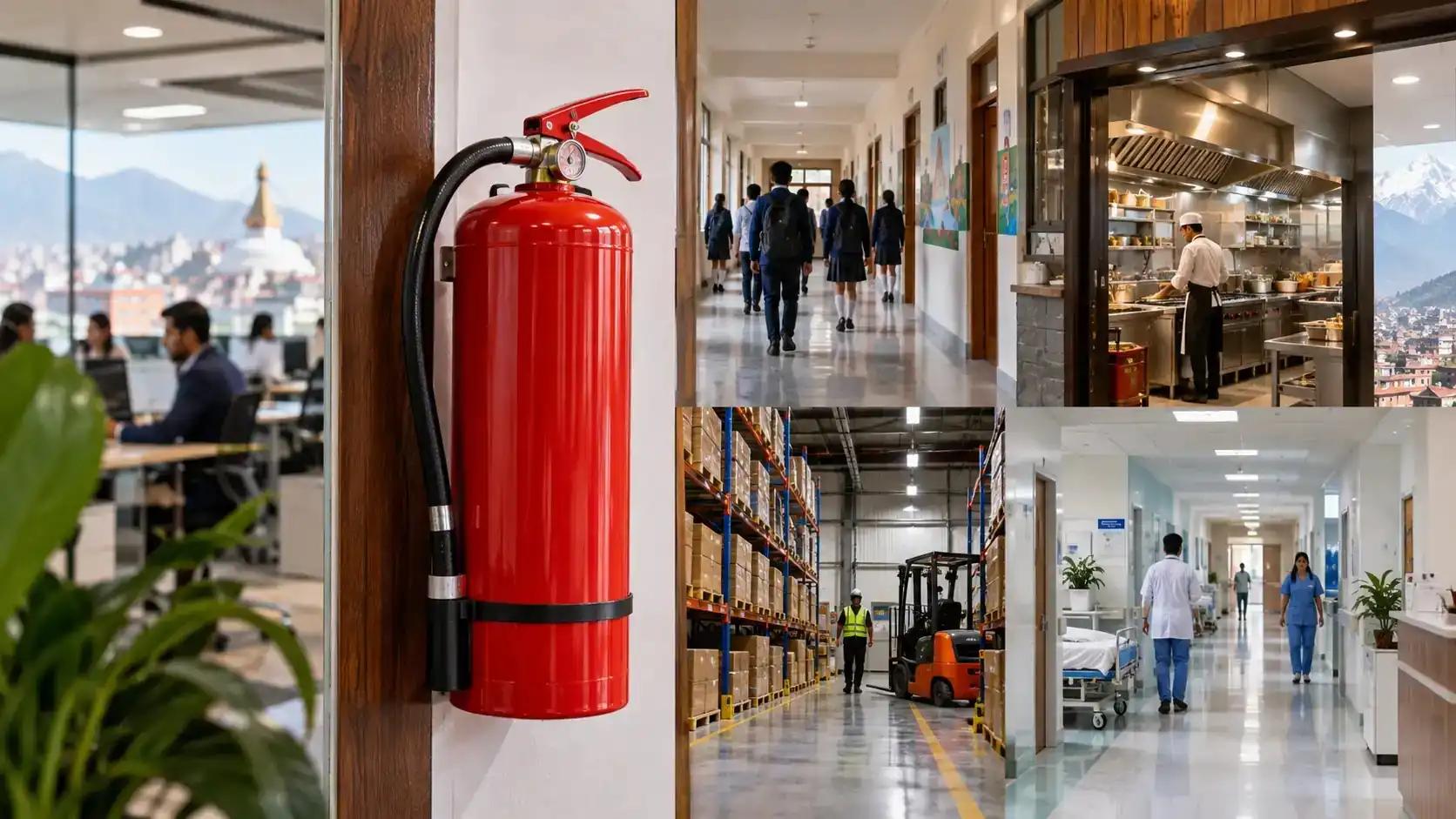
Fire extinguishers are one of the first lines of defence against a small, developing fire. However, providing fire extinguishers in a commercial or public property is not simply a matter of purchasing a few cylinders and placing them near the entrance.
An effective fire-extinguisher plan should consider the type of fire hazard, floor area, building layout, occupancy, extinguisher rating, accessibility, location of high-risk areas and applicable fire-safety requirements.
A school, office, restaurant, shopping mall, warehouse and hospital may all require portable fire extinguishers, but the fire risks inside these properties can be very different. A commercial kitchen, for example, presents different hazards from a server room or school classroom.
This guide explains the main factors that should be considered when selecting, calculating and positioning fire extinguishers for commercial and public places in Nepal.
Safelincs Technologies supplies a range of fire extinguishers in Nepal, including ABC dry powder, CO₂, foam, K-Type and clean-agent extinguishers for different residential, commercial and industrial applications.Explore Fire Extinguishers at Safelincs Technologies
Why Do Fire Extinguisher Requirements Differ Between Buildings?
There is no single extinguisher configuration that is suitable for every property.
The requirement depends primarily on what can burn, where a fire could start, how quickly it could spread and how the occupants can safely reach firefighting equipment.
For example:
Premises | Typical Fire Risks |
School or college | Paper, furniture, laboratories, computers, electrical equipment, kitchens |
Office | Paper, furniture, computers, server equipment, electrical panels, pantry |
Restaurant | Cooking oils, LPG, electrical appliances, packaging, furniture |
Shopping mall | Retail stock, electrical installations, food courts, storage, parking |
Warehouse | Stored materials, packaging, machinery, electrical equipment, charging areas |
Hospital | Electrical/medical equipment, laboratories, kitchens, administrative areas |
Therefore, fire-extinguisher planning should begin with a fire-risk assessment, not simply the size of the property.
What Determines How Many Fire Extinguishers Are Required?
One of the most common questions is:
“How many fire extinguishers does my building need?”
There is no reliable universal answer such as “one extinguisher for every building” or one fixed number that can be applied to schools, offices, hospitals and warehouses alike. The required quantity should be determined using several technical factors.
1. Floor Area
As the protected floor area increases, more firefighting coverage may be necessary. However, floor area alone is not sufficient to calculate the number of extinguishers.
Two properties of identical size can have very different fire risks.
For example, a 500 m² office containing desks and computers is not equivalent to a 500 m² warehouse containing combustible packaging or flammable materials.
2. Fire Hazard
The materials present inside the premises determine the possible fire classes and therefore affect extinguisher selection.
Possible hazards include:
paper and cardboard
wood and furniture
textiles
flammable liquids
LPG and other gases
cooking oils and fats
machinery
electrical installations
electronic equipment
stored chemicals or specialist materials
The extinguisher should be selected according to the identified hazard and its approved fire rating/application.
3. Number of Floors
A multi-storey property cannot normally be treated as one single open area. Extinguishers should remain accessible to occupants on the relevant floors and within the areas being protected.
A five-storey office, school or hospital therefore requires a different distribution strategy from a similar single-storey property.
4. Building Layout
Two buildings with the same total area may require very different extinguisher arrangements.
Consider:
corridors
staircases
rooms
partitions
locked areas
fire compartments
storage areas
kitchens
laboratories
server rooms
electrical rooms
escape routes
An extinguisher on one side of a large building may provide little practical protection if occupants have to travel through several rooms or around physical obstructions to reach it.
5. Extinguisher Fire Rating
Cylinder capacity and extinguisher fire rating are not the same thing. The fire rating represents the extinguisher's tested firefighting capability for specified fire conditions. Therefore, extinguisher selection should not be based only on whether a cylinder is 2 kg, 4 kg, 6 kg or 9 kg.
Consider:
Fire hazard → Extinguishing agent → Fire rating → Capacity → Coverage
rather than:
Floor area → Cylinder size only
Safelincs' existing fire-extinguisher guidance similarly recommends considering fire classification, extinguishing agent, rating, application and technical specifications instead of selecting purely by cylinder size.
6. Travel and Accessibility
An extinguisher is useful only if it can be reached safely and quickly. Its location should therefore consider the distance an occupant would have to travel and whether the equipment can be reached without moving toward an unsafe fire condition.
The required travel distance can depend on the fire hazard, extinguisher rating and standard being applied to the project.
This is another reason why a simple universal “one extinguisher per X square metres” formula should not be applied without reference to the appropriate standard and fire-risk assessment.
7. Special High-Risk Areas
Some parts of the same building may require additional or different extinguishers.
Examples include:
Commercial kitchen: cooking-oil and appliance hazards
Server room: sensitive electronic equipment
Science laboratory: chemicals and specialist hazards
Electrical room: energized electrical equipment
Warehouse charging area: battery/electrical hazards
Workshop: machinery, fuels or flammable liquids
These areas should be assessed individually rather than assuming the extinguisher protecting the general corridor also provides adequate protection for every specialist risk.
Understanding Fire Classes Before Selecting an Extinguisher
The first technical step is identifying what material is likely to burn. Depending on the classification system and equipment certification being followed, common fire categories can include:
Class A: Ordinary Combustible Materials
Examples include:
paper
wood
cardboard
fabric
some plastics
These hazards are common in schools, offices, hotels, retail stores and warehouses.
Class B: Flammable Liquids
Examples may include:
petrol
diesel
paints
solvents
some oils
These hazards may occur in workshops, industrial properties, warehouses and specialised storage facilities.
Class C: Flammable Gases
Depending on the applicable classification standard, this category can include gases such as LPG. Gas-related fire protection requires particular care because controlling the fuel supply can be an important part of the emergency response.
Class D: Combustible Metals
These are specialist fires involving certain combustible metals and generally require specifically approved extinguishing agents. A standard multipurpose extinguisher should not automatically be assumed suitable.
Class F / Cooking-Oil Fires
Commercial cooking oils and fats can reach very high temperatures. Restaurants, hotel kitchens, cafeterias and institutional kitchens can therefore require specialist wet-chemical/K-Type fire-extinguisher solutions, depending on the equipment certification and applicable standard.
What About Electrical Fires?
Electrically energized equipment requires special consideration. Computers, distribution boards, machinery, servers and electrical appliances can all present electrical hazards. Instead of assuming that “electrical” is universally assigned the same fire-class letter, check the extinguisher's certification, application markings and manufacturer instructions, because classification conventions can vary.
CO₂ and other appropriate extinguishing technologies are commonly considered where electrical equipment is involved, depending on the specific hazard.
Which Types of Fire Extinguishers Are Used in Commercial & Public Places?
Different extinguishing agents control fire in different ways.
1. ABC Dry Powder Fire Extinguisher
ABC dry powder extinguishers are commonly used as multipurpose extinguishers.
Depending on their certification and rating, they can provide protection against several common fire hazards and are widely used in:
offices
schools
commercial buildings
warehouses
retail properties
vehicles
workshops
Their versatility does not mean that ABC powder is automatically the best extinguisher for every environment.
Powder discharge can create substantial residue and reduce visibility, which should be considered around sensitive equipment or certain occupied environments. View ABC Type Fire Extinguishers
2. CO₂ Fire Extinguisher
Carbon dioxide extinguishers are commonly selected for appropriate electrical and electronic-equipment risks.
Typical applications can include:
electrical panels
computer equipment
office electronics
server and IT equipment
certain machinery
One major advantage is that CO₂ does not leave the powder residue associated with dry chemical extinguishers.
However, it should still be selected according to its approved application and the actual fire hazard.
3. Foam Fire Extinguisher
Foam extinguishers can provide cooling and form a barrier over suitable fuel surfaces.
Depending on their rating and certification, they may be used for appropriate:
combustible-solid fires
flammable-liquid risks
Their suitability around energized electrical equipment must be determined from the specific extinguisher's approved applications and instructions.
4. Wet Chemical / K-Type Fire Extinguisher
Wet-chemical extinguishers are designed particularly for high-temperature cooking-oil and fat fires.
They are especially relevant to:
restaurants
hotels
cafeterias
institutional kitchens
commercial food-production facilities
Safelincs' existing technical guidance identifies wet chemical extinguishers with commercial cooking environments.
5. Clean-Agent Fire Extinguisher
Clean-agent extinguishers can be suitable for applications where protecting sensitive equipment and avoiding residue are important considerations.
Possible applications may include:
server rooms
telecommunications areas
control rooms
electronics
specialist equipment
The appropriate agent should always be matched to the actual hazard and equipment certification.
Fire Extinguisher Requirements for Different Commercial & Public Places
This is where the requirements become premises-specific.
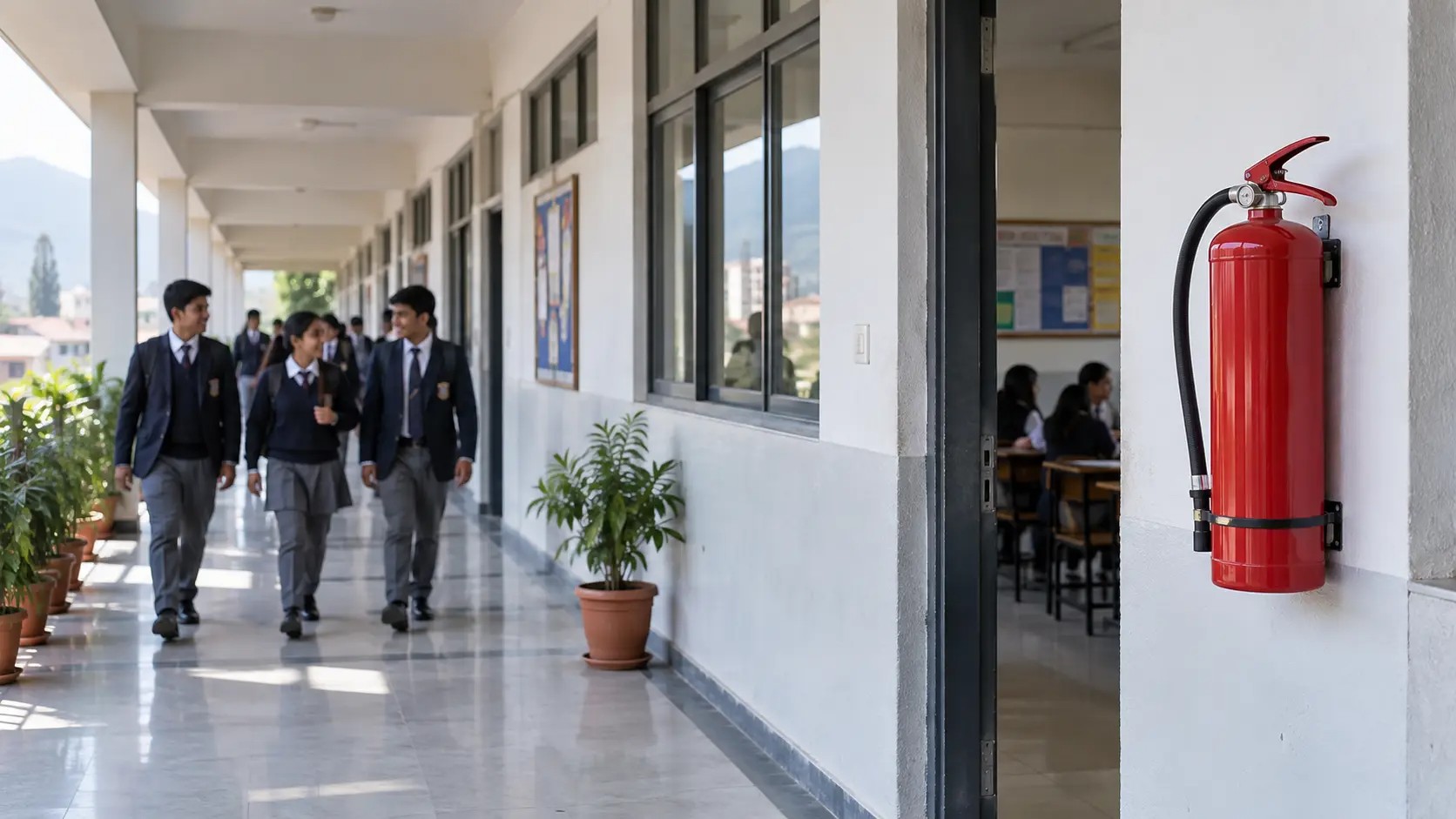
1. Fire Extinguishers for Schools & Colleges
A school should not be treated as one uniform fire-risk area.
Different parts of a school may include:
Classrooms: paper, furniture and general combustible materials
Libraries: books, shelving and high concentrations of paper
Computer laboratories: electronic and electrical equipment
Science laboratories: chemicals and specialist hazards
Canteens/kitchens: cooking equipment, oils, LPG and electrical appliances
Electrical rooms: switchboards and electrical installations
The number, type and placement of extinguishers should therefore reflect each risk area rather than installing the same cylinder throughout the entire campus.
For a detailed breakdown of extinguisher types, quantity and placement in educational facilities, read our Fire Extinguisher Requirements for Schools & Colleges guide.
2. Fire Extinguishers for Offices
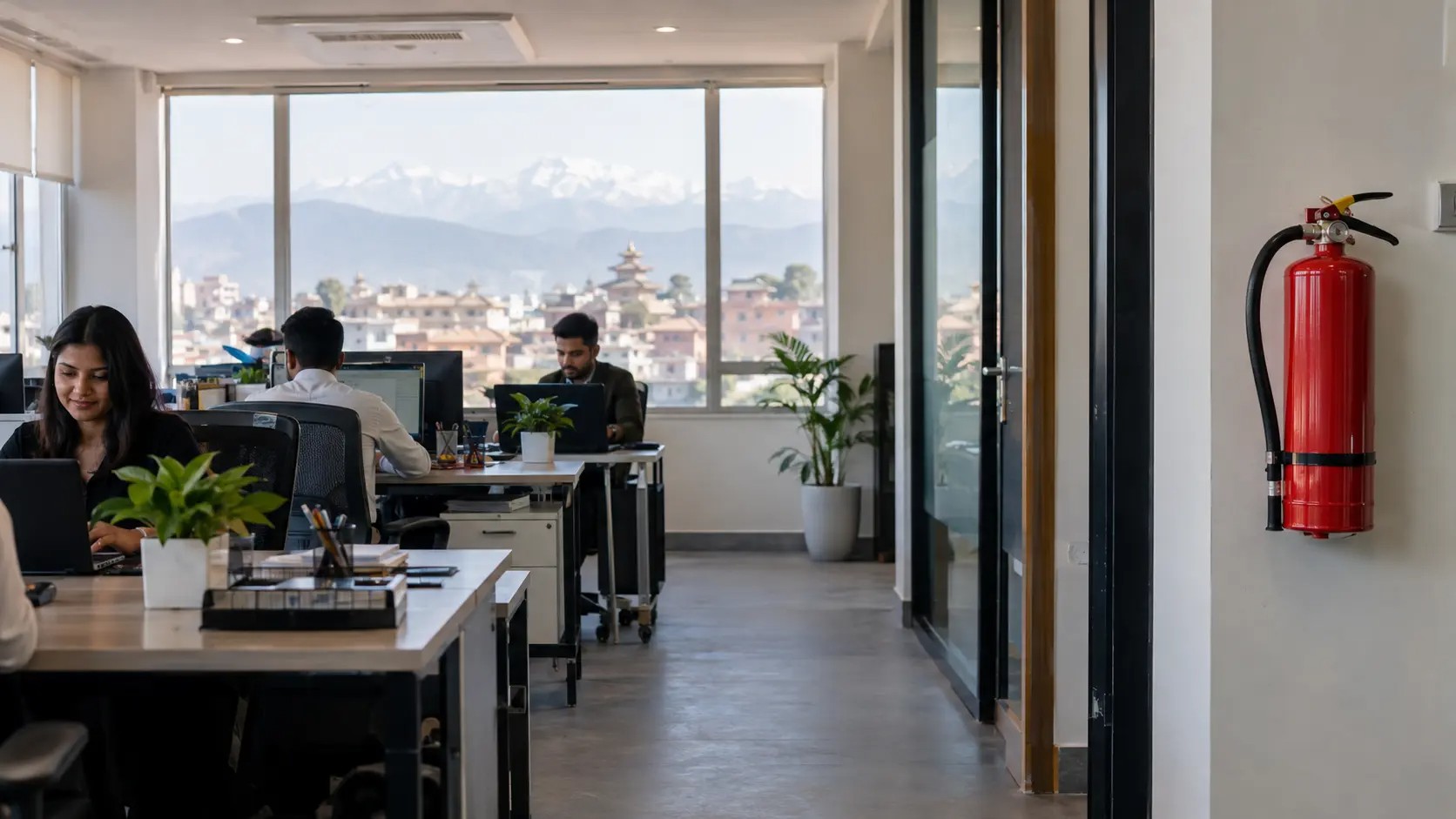
Modern offices contain more than desks and paper.
Possible risks include:
paper and documents
furniture
electrical wiring
computers
printers
UPS systems
server equipment
kitchen/pantry appliances
electrical distribution boards
A small single-floor office and a multi-storey corporate office therefore require different fire-protection planning.
The assessment should consider:
floor area + layout + number of floors + fire hazard + fire rating + specialist rooms + accessibility
rather than simply the number of employees.
Learn how to determine the right number, type and placement of extinguishers in our How Many Fire Extinguishers Does an Office Need? guide.
3. Fire Extinguishers for Restaurants & Commercial Kitchens
Restaurants can contain several different fire risks within a relatively small area.
For example:
Dining Area: Furniture, paper, textiles and decorative materials may create ordinary combustible hazards.
Kitchen: Cooking oil, deep-fat fryers, gas appliances and high-temperature cooking equipment require a different approach.
Electrical Equipment: Refrigerators, ovens, mixers and other appliances introduce electrical hazards.
LPG/Gas Storage or Supply: Fuel-gas installations require appropriate engineering controls and emergency planning.
Consequently, simply installing one general-purpose extinguisher at the restaurant entrance may not adequately address every hazard.
For restaurant-specific risks, extinguisher selection and placement, see our Fire Extinguisher Requirements for Restaurants & Commercial Kitchens guide.

4. Fire Extinguishers for Shopping Malls & Retail Stores
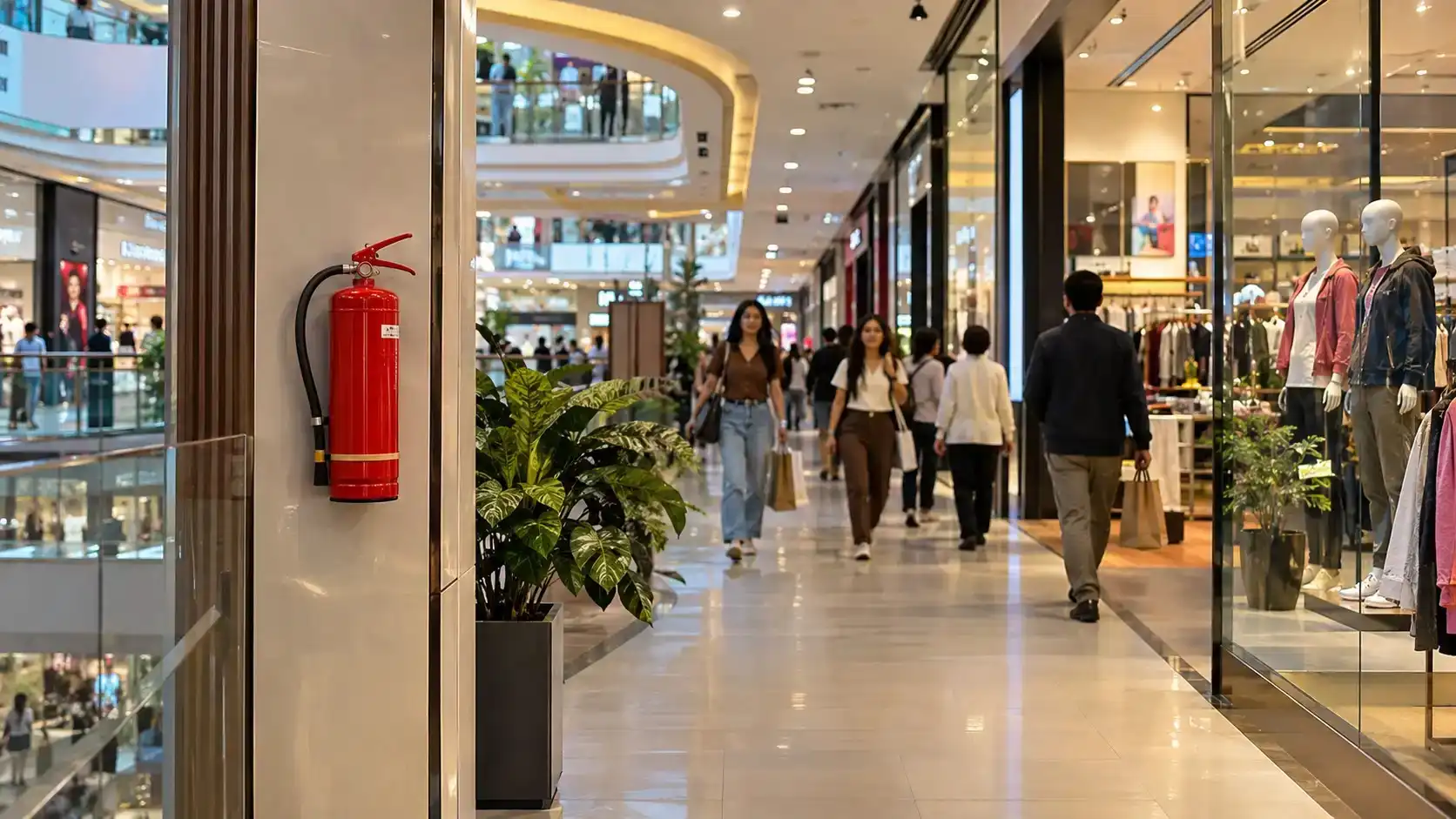
Shopping malls are complex because one facility can contain many different occupancies.
Possible risk areas include:
clothing stores
electronics stores
supermarkets
restaurants
food courts
storage rooms
common corridors
electrical rooms
plant rooms
parking areas
A Shopping Mall fire-protection plan should therefore consider individual risk zones as well as common areas. The type of merchandise stored in individual shops can also significantly influence fire risk.
Explore fire extinguisher planning for retail units, food courts, storage areas and common spaces in our Fire Extinguisher Requirements for Shopping Malls & Retail Stores guide.
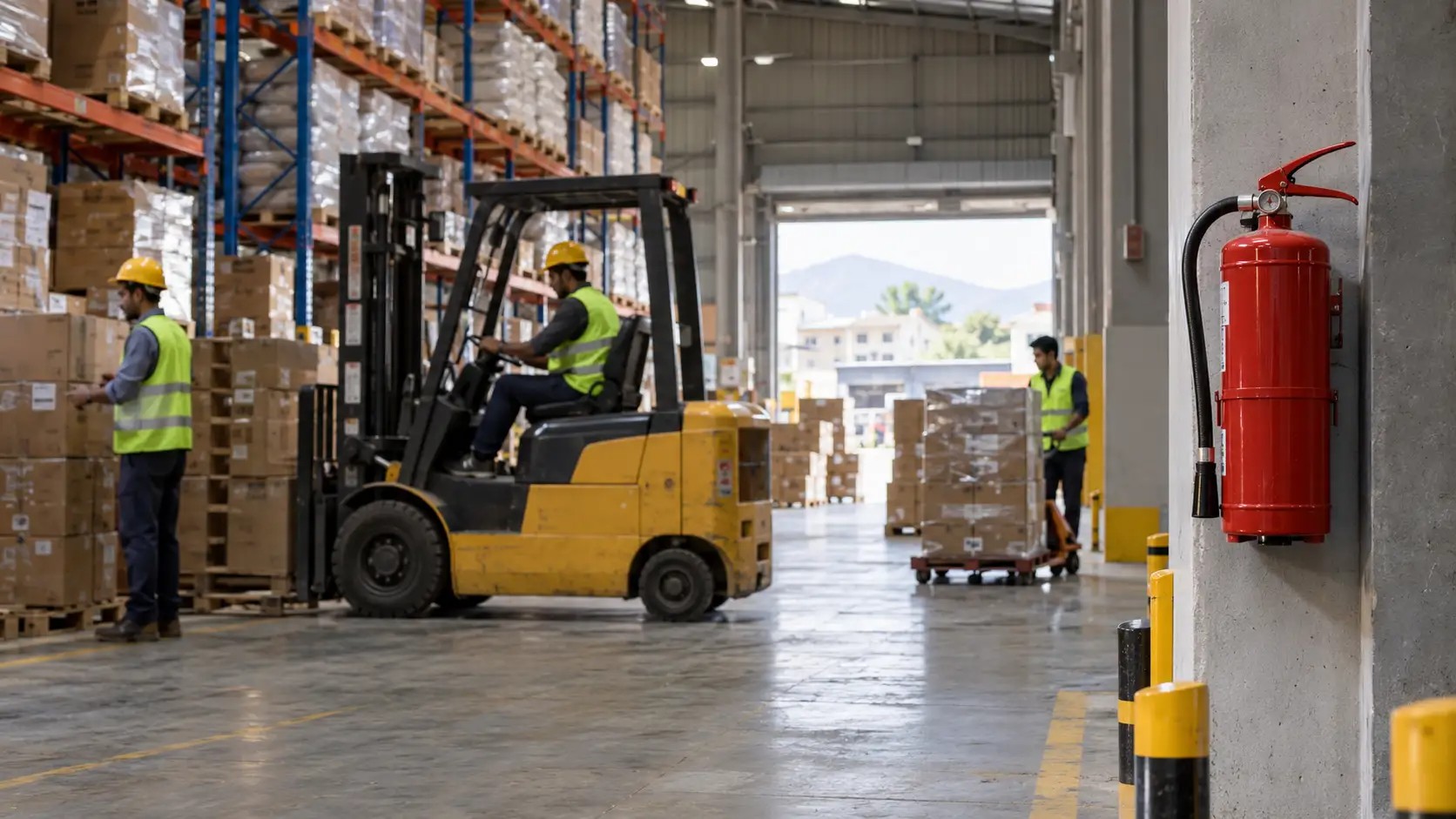
5. Fire Extinguishers for Warehouses
Warehouses require particularly careful assessment because the fire load can vary considerably according to what is stored.
Important factors include:
stored commodity
packaging
rack configuration
combustible materials
flammable liquids
machinery
electrical installations
battery-charging areas
loading bays
floor area
storage height
A warehouse storing paper products should not automatically use the same extinguisher arrangement as a facility storing paints, chemicals or electrical equipment.
For a more technical look at warehouse fire hazards, extinguisher types, quantity and placement, read our Fire Extinguisher Requirements for Warehouses guide.
6. Fire Extinguishers for Hospitals & Healthcare Facilities
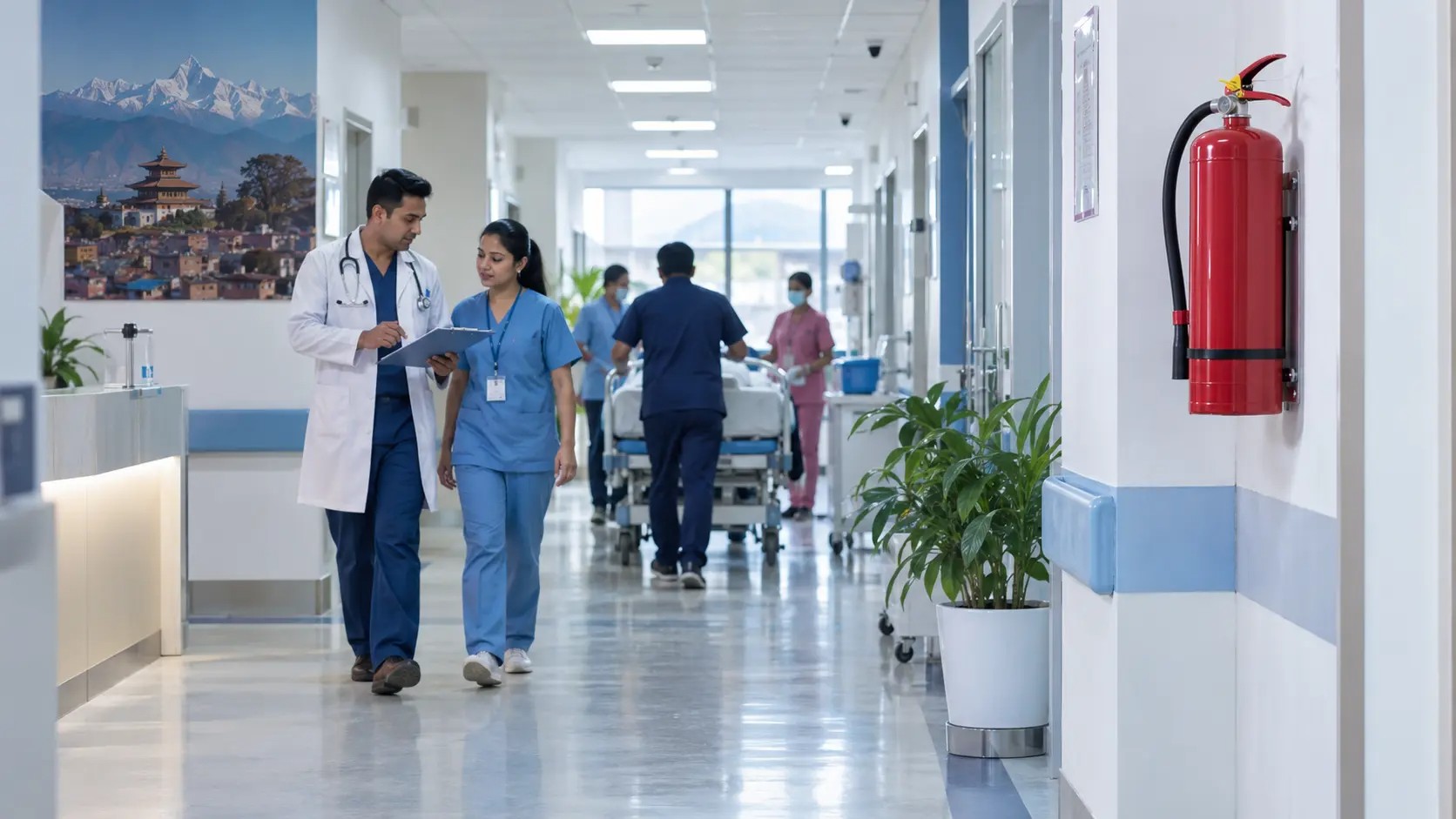
Healthcare facilities require a particularly careful approach because fire protection must consider both the hazard and the occupants.
A hospital can contain:
patient wards
laboratories
pharmacies
diagnostic equipment
computers
electrical equipment
kitchens
laundry areas
administrative offices
specialist medical areas
Some occupants may also have limited mobility or require assistance during evacuation.
Fire extinguishers in healthcare environments should therefore form part of a broader fire-safety strategy involving detection, alarm, compartmentation, evacuation planning, staff preparedness and firefighting equipment.
Learn how fire extinguisher selection and placement should be planned across wards, laboratories, kitchens and equipment areas in our Fire Extinguisher Requirements for Hospitals & Healthcare Facilities guide.
Where Should Fire Extinguishers Be Installed?
Selecting the right extinguisher is only half of the process. Poor placement can make an otherwise suitable extinguisher difficult or unsafe to use.
As a general planning principle, extinguishers should be:
clearly visible
readily accessible
unobstructed
appropriately distributed
identified with suitable signage where required
positioned in relation to escape routes and risk areas
mounted or installed appropriately
protected from unsuitable environmental conditions
located so users are not forced deeper into a hazardous area to retrieve them
Do not hide extinguishers:
behind furniture
inside inaccessible storage
behind locked doors
underneath stacked materials
in locations blocked by merchandise
Special hazards may require extinguishers positioned in relation to the hazard while still allowing the user to maintain a safe escape route.
Should Fire Extinguishers Be Installed Near the Fire Hazard?
They should be accessible for the identified hazard, but this does not mean placing the extinguisher so close to the likely ignition point that it becomes impossible to reach once a fire begins.
For example, putting the only kitchen extinguisher immediately beside equipment most likely to catch fire can create a problem if flames prevent safe access.
Placement therefore needs to consider: Hazard location + approach route + escape route + visibility + accessibility together.
Fire Extinguishers Are Only One Part of Building Fire Safety
Portable extinguishers provide initial fire suppression. They should not be considered a complete fire-protection system by themselves.
A commercial fire-safety system may include:
Detection ↓ Smoke/heat detection
Control
↓
Fire alarm control panel
Warning
↓
Sounders, strobes and manual call points
Initial Suppression
↓
Portable fire extinguishers
Firefighting
↓
Fire hydrant/hose systems where required
Evacuation & Passive Protection
↓
Escape routes, emergency exits and fire-resistant construction
Safelincs Technologies provides broaderfire safety equipment and products in Nepal, including fire alarm systems, fire extinguishers, hydrant equipment and related firefighting solutions.Explore Fire Safety Equipment
Fire Extinguisher Inspection and Maintenance
Installing an extinguisher does not mean it can be ignored until an emergency occurs. Fire extinguishers should be kept in serviceable condition through appropriate inspection and maintenance.
Routine visual checks should consider:
Accessibility: Is the extinguisher still easy to reach?
Physical Damage: Check for obvious corrosion, dents or damage.
Safety Pin and Seal: Where applicable, check that operating components remain intact.
Pressure Indicator: For units fitted with a pressure gauge, verify its condition according to the manufacturer's instructions.
Hose and Nozzle: Check for damage, obstruction or deterioration.
Labelling: Instructions and identification should remain legible.
Service Condition: Confirm servicing and testing requirements according to the extinguisher type, manufacturer and applicable standard.
If an extinguisher has been discharged, even partially - it should not simply be returned to its bracket without evaluation. Inspection, recharge, agent replacement or other servicing may be necessary. Safelincs' existing operating guide covers these post-discharge considerations in more detail.Read: How to Use a Fire Extinguisher – PASS Method Guide
Fire Extinguisher Requirements and Fire Safety Standards in Nepal
Fire-safety planning should consider applicable Nepalese requirements as well as any relevant project-specific codes, standards, local authority requirements, insurer requirements and manufacturer specifications.
The Department of Urban Development and Building Construction currently lists NBC 107: Provisional Recommendation on Fire Safety among Nepal's National Building Codes.
NBC 107 includes a recommendation concerning the provision of appropriate portable fire extinguishers. However, the code itself takes a limited approach to fire protection and notes that its fundamental provisions do not necessarily cover all requirements for every type of building. Other relevant codes and standards may therefore need to be considered for more complex buildings and occupancies.
This is particularly important for facilities such as:
hospitals
schools
malls
hotels
industrial facilities
large warehouses
high-occupancy commercial buildings
hazardous facilities
For such properties, extinguisher quantity and placement should be determined by a competent fire-safety professional using the applicable requirements for the project.
Common Fire Extinguisher Planning Mistakes
1. Choosing Only by Cylinder Size
A larger cylinder is not automatically suitable for every hazard. Check the fire class, extinguishing agent, rating and application.
2. Installing the Same Extinguisher Everywhere
A kitchen, office and server room can require different firefighting characteristics.
3. Ignoring Specialist Areas
Electrical rooms, kitchens, laboratories and storage areas should be assessed separately.
4. Poor Placement
An extinguisher that is hidden or difficult to reach may not provide practical protection.
5. Blocking Fire Extinguishers
Furniture, stock and temporary storage should never obstruct access.
6. Buying Without Checking Certification
Product certification, testing, manufacturer specifications and technical performance should be considered alongside price.
7. Forgetting Maintenance
Fire extinguishers are safety equipment and require ongoing inspection and servicing.
Fire Extinguisher Planning Checklist for Commercial & Public Properties
Before purchasing or installing fire extinguishers, check:
Property
What is the total floor area?
How many floors are there?
How is the property divided?
Occupancy
How is each area used?
How many people may occupy it?
Fire Hazards
What materials can burn?
Are flammable liquids or gases present?
Are cooking oils present?
Is sensitive electrical equipment present?
Equipment
Which extinguishing agent is appropriate?
What fire rating is required?
Is specialist equipment necessary?
Placement
Is the extinguisher visible?
Is it unobstructed?
Can occupants reach it safely?
Is it appropriately positioned relative to escape routes?
Maintenance
Is routine inspection arranged?
Are service records maintained where required?
Have discharged/damaged units been replaced or serviced?
Conclusion
Determining fire extinguisher requirements for commercial and public places involves much more than deciding how many cylinders to purchase.
A technically planned approach considers: Fire Hazard → Premises Type → Fire Class → Extinguishing Agent → Fire Rating → Quantity → Placement → Inspection & Maintenance
Schools, offices, restaurants, malls, warehouses and hospitals each have different operating environments and fire risks. Their extinguisher requirements should therefore be assessed according to the actual property rather than applying one standard configuration to every location.
Safelincs Technologies supplies a wide range of fire extinguishers and fire safety equipment in Nepal for commercial, institutional and industrial applications. Appropriate equipment should be selected according to the identified fire risk, project requirements and applicable fire-safety standards. Explore Fire Extinguishers in Nepal
Frequently Asked Questions
1. How many fire extinguishers are required in a commercial building?
There is no single number suitable for every commercial building. Quantity depends on factors such as floor area, hazard, extinguisher rating, layout, floors, access distance and the applicable fire-safety requirements.
2. Which fire extinguisher is best for commercial buildings?
The correct extinguisher depends on the identified fire hazard. ABC dry powder, CO₂, foam, wet chemical and clean-agent extinguishers serve different applications.
3. Can one ABC fire extinguisher protect an entire office?
Not necessarily. The office's size, floors, layout, fire rating, travel distance and specialist hazards such as server or electrical rooms must also be considered.
4. Where should fire extinguishers be placed?
Extinguishers should be visible, readily accessible and appropriately distributed in relation to risk areas and escape routes. They should not be blocked, hidden or placed where a developing fire could make them inaccessible.
5. Do restaurants need a different fire extinguisher?
Commercial kitchens can present high-temperature cooking-oil and fat hazards that may require specialist wet-chemical/K-Type protection. Other parts of the restaurant may present different risks and should be assessed separately.
6. Do schools need fire extinguishers in laboratories and computer rooms?
These areas should be included in the fire-risk assessment because their hazards can differ from ordinary classrooms. Extinguisher selection should match the specific materials and equipment present.