
Video Door Phones in Nepal
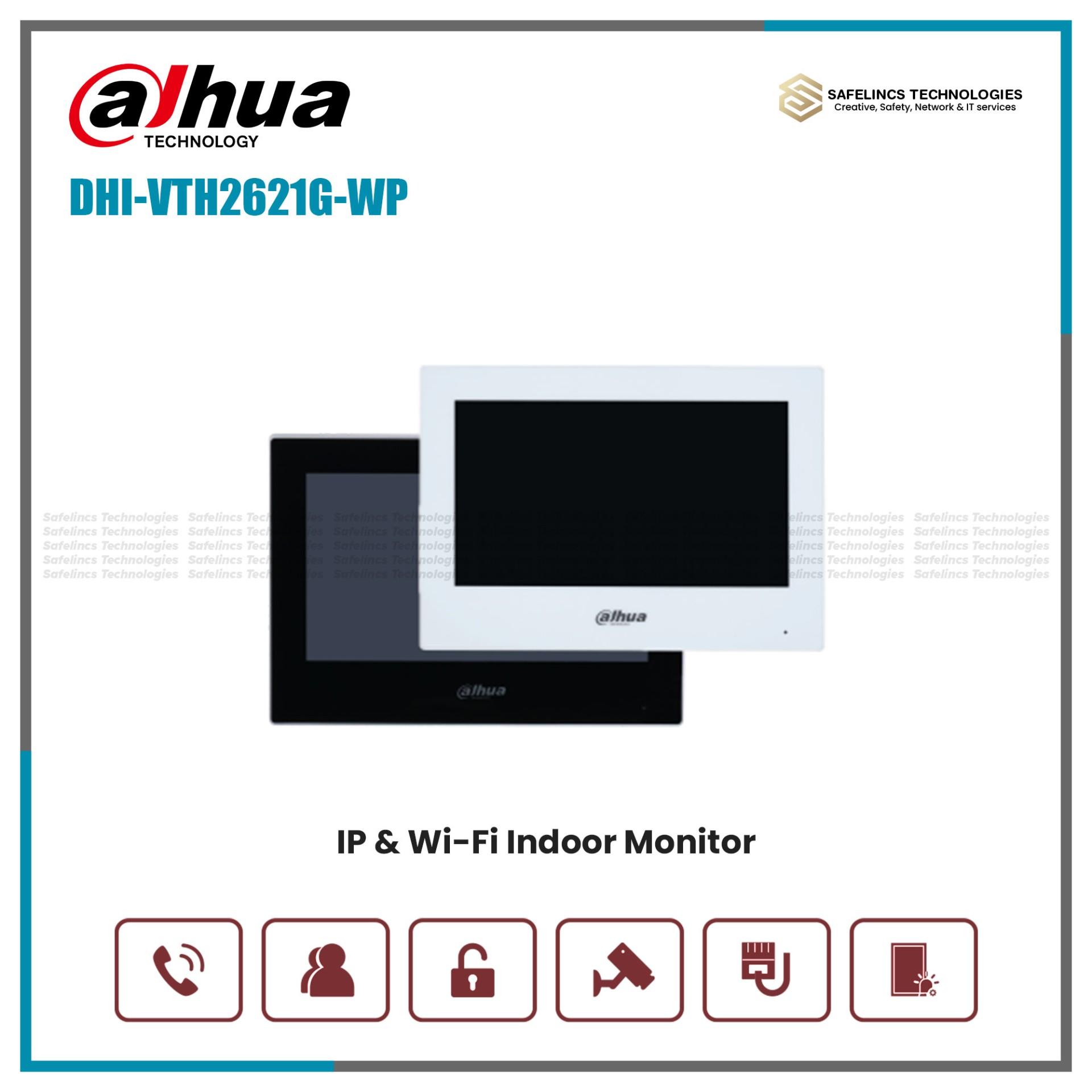
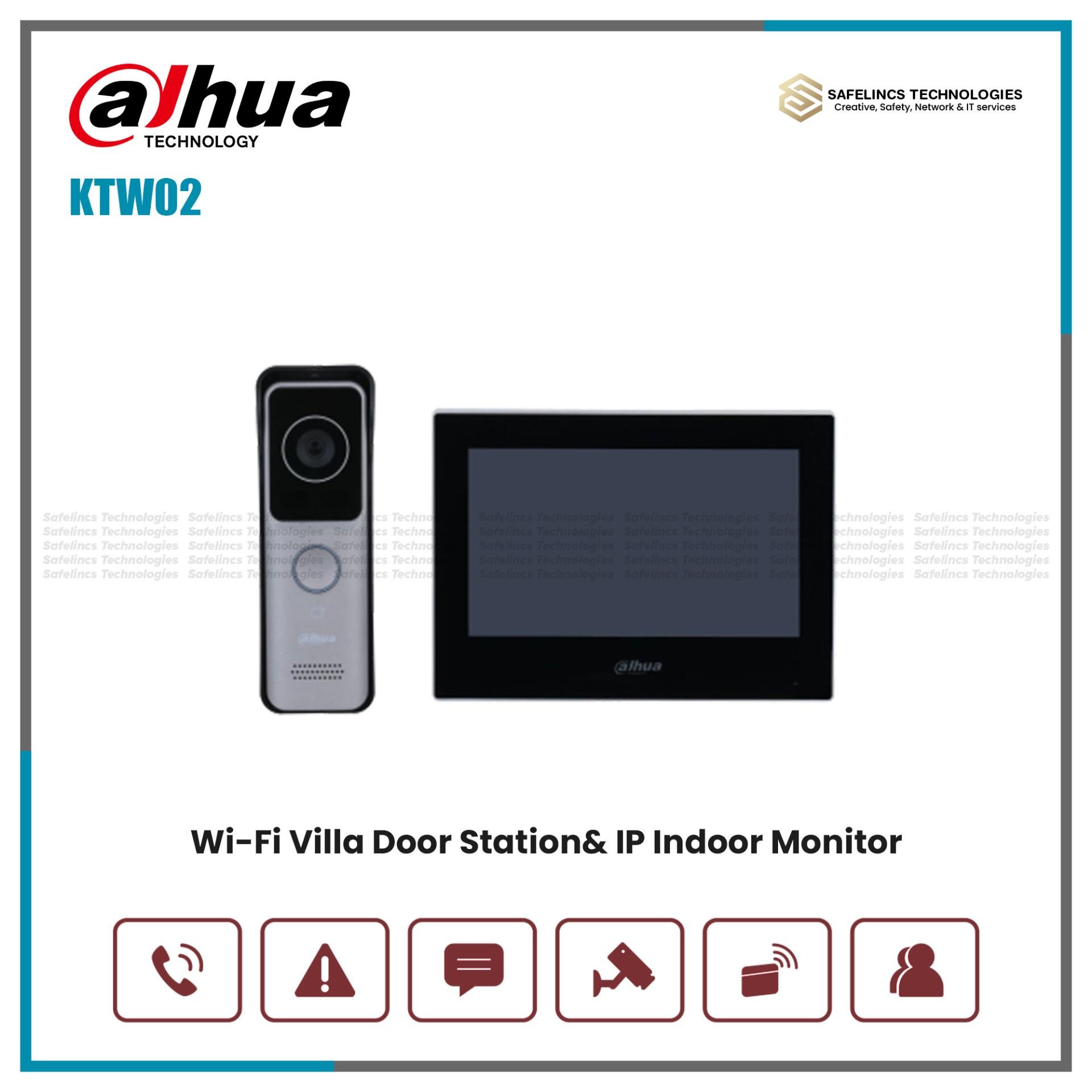
A video door phone combines visitor identification, two-way audio communication and controlled door access in a single security system. Unlike a standard doorbell that only provides an alert, a video door phone allows users to see and communicate with visitors before granting entry.
Safelincs Technologies provides video door phone systems in Nepal for homes, apartments, offices, commercial buildings, institutions and controlled entrances. Depending on the system design, a video intercom may include an outdoor door station, indoor monitor, IP network connection, mobile application, electric door lock and access-control components.
Modern IP video door phone systems can also integrate with network infrastructure, CCTV surveillance and access-control systems, creating a more centralized security solution. Customers can compare the available products above to check the latest video door phone price in Nepal and select a configuration suitable for their property.
What Is a Video Door Phone System?
A video door phone is an electronic visitor-management and entrance communication system consisting of an outdoor door station and one or more indoor monitors or management interfaces.
A typical operating sequence is: Visitor presses call button → Outdoor camera and microphone activate → Indoor monitor receives call → User views and communicates with visitor → Door release is activated when access is approved
Depending on the model and system architecture, communication can occur through dedicated wiring, an Ethernet network or Wi-Fi. A complete system can include:
Outdoor video door station
Indoor monitor
Camera and microphone
Loudspeaker
Call button
Door release relay
Ethernet/network connection
PoE or DC power supply
Electric lock
Exit button
Mobile application
Access-control integration
A standard doorbell normally provides only an audible or mobile alert. A video door phone adds live video, two-way voice communication, visitor verification and controlled door unlocking.
For installations where visitor control must work together with employee or restricted-area entry, Safelincs also provides Hikvision access control systems including electronic locks and access-control devices.
Main Components of a Video Door Phone System
1. Outdoor Video Door Station
The outdoor station is installed at the gate, main entrance, apartment entrance or other controlled access point. It acts as the visitor-side interface of the video intercom system. Depending on the model, an outdoor station may include:
HD camera
Wide-angle lens
Infrared illumination
Microphone
Speaker
Call button
Relay output
RFID card reader
PIN keypad
Tamper protection
Weather-resistant enclosure
Camera specifications may vary between models. Resolution, field of view, WDR performance and low-light capability determine how clearly visitors can be identified under different lighting conditions.
Outdoor installations should also consider the IP protection rating of the enclosure. Models designed for external installation may use weather-resistant housings such as IP65 or similar protection levels, but the exact rating should always be checked on the selected model.
2. Indoor Monitor
The indoor monitor is the main user interface for answering visitor calls. Common monitor configurations can include:
7-inch or 10-inch display
TFT/LCD display
Capacitive touchscreen
Microphone and loudspeaker
Two-way audio
Live outdoor-station view
Door-unlock controls
Snapshot or recording support
microSD storage on supported models
Alarm inputs/outputs
Ethernet or Wi-Fi connectivity
In larger systems, multiple indoor monitors can be assigned to different rooms, offices or apartments. Certain IP-based systems can also display compatible network camera feeds, allowing the indoor monitor to serve as part of a broader security interface.
For properties requiring continuous security-camera monitoring, explore Safelinc's CCTV surveillance cameras and systems.
3. Door Lock and Relay Control
A video door phone does not normally unlock a door mechanically by itself. Instead, an integrated relay or access-control interface sends an electrical signal to the connected locking system. Compatible door hardware may include:
Electromagnetic lock
Electric strike
Electric bolt
Automatic gate controller
Electric gate lock
Additional access-control components may include:
Lock power supply
Exit button
Door-contact sensor
Emergency break-glass unit
Access controller
Relay module
The relay may operate using Normally Open (NO) or Normally Closed (NC) contacts depending on the lock and security design. When designing a video door phone with lock, the lock voltage, current requirement, relay capacity and fail-safe/fail-secure operation should be checked before installation.
Network and Power Requirements
Modern IP door-phone systems use structured network infrastructure similar to many IP surveillance systems. Typical components can include:
Cat5e cable
Cat6 cable
PoE switch
Ethernet switch
PoE injector
12V DC power supply
Router
LAN infrastructure
For new structured installations, Safelincs provides Cat6 network cables that can be used for compatible Ethernet-based security and networking systems.
Power over Ethernet
With compatible equipment, Power over Ethernet (PoE) carries network data and electrical power over the same Ethernet cable.
Typical architecture include: Outdoor Station → Cat6 Cable → PoE Switch → LAN
This reduces the need for a separate power cable to supported devices. However, PoE compatibility must be checked carefully. Depending on the system, equipment may support standards such as IEEE 802.3af or IEEE 802.3at, while some manufacturers may use specific powering requirements. Safelincs also supplies Dahua PoE switches for compatible network-security installations.
Types of Video Door Phone Systems
1. IP Video Door Phone
An IP video door phone transmits video, audio and signaling through an Ethernet/IP network. Typical features can include:
TCP/IP communication
Ethernet connectivity
PoE
SIP communication on compatible models
Remote configuration
Mobile application connectivity
Multiple indoor monitors
Central management
CCTV integration
Access-control integration
IP systems are particularly suitable where scalability and centralized management are required, such as:
Modern homes
Offices
Apartment buildings
Educational institutions
Commercial buildings
Multi-entry premises
Because IP systems use network infrastructure, network addressing, switching capacity, VLAN design and bandwidth may become relevant in larger projects.
2. Analog Video Door Phone
Analog systems generally use dedicated cabling between the outdoor station and indoor monitor. They are typically simpler but may provide fewer network-based features than modern IP systems. Common characteristics include:
Dedicated wiring
Direct indoor/outdoor connection
Simple configuration
Limited remote management
Limited scalability
Minimal network dependency
Analog video door phones can still be suitable for smaller properties where basic visitor communication and door unlocking are required.
3. Wi-Fi or Wireless Video Door Phone
A wireless video door phone usually uses Wi-Fi for network communication between the device and router or cloud service. Depending on the model, features can include:
Wi-Fi connectivity
Mobile notifications
Live video
Two-way communication
Remote answering
Event history
App-based door unlocking
Wireless does not necessarily mean completely wire-free. The outdoor station, indoor monitor or electric lock may still require a physical power supply. If the primary requirement is wireless surveillance rather than entrance communication, Safelincs has a separate range of wireless CCTV cameras.
4. Video Door Phone Kit
A video door phone kit bundles the main components required for a basic installation. A kit can contain:
Outdoor door station
Indoor monitor
Power supply
Mounting accessories
Depending on the package, additional equipment may still be required, including:
PoE switch
Network cable
Electric lock
Access-control power supply
Exit button
Brackets
RFID cards
Before purchasing a kit, check whether the required lock, network switch and installation accessories are included or must be purchased separately.
IP Video Door Phone vs Analog Video Door Phone
Feature | IP Video Door Phone | Analog Video Door Phone |
Communication | TCP/IP/Ethernet | Dedicated wiring |
Network integration | Strong | Limited |
PoE | Available on compatible models | Usually not used |
Mobile connectivity | Common on supported systems | Limited |
Scalability | High | Lower |
CCTV integration | Possible | Limited |
Remote configuration | Possible | Limited |
Multi-building system | Better suited | Less flexible |
Installation | Requires network planning | Generally simpler |
Future expansion | Easier | More restricted |
An IP system is generally more appropriate when the project requires network integration, multiple endpoints, mobile access or future expansion. An analog system may be sufficient for a simple single-door installation with limited integration requirements.
Technical Features to Consider Before Buying a Video Door Phone
1. Camera Resolution
The outdoor-station camera should provide sufficient resolution for visitor identification. Depending on the product generation, available resolutions may include:
720p
1080p
2 MP
Higher-resolution options
Resolution should not be evaluated alone. Lens angle, lighting, WDR and installation position also influence usable image quality.
2. Field of View
A wide-angle camera can cover more of the entrance area. Important specifications include:
Horizontal field of view
Vertical field of view
Lens focal length
Installation height
An excessively narrow field of view can create blind areas close to the door.
3. Wide Dynamic Range
Entrances frequently have difficult lighting conditions. For example, a visitor may stand in a shaded area while bright sunlight appears behind them.
Wide Dynamic Range (WDR) helps preserve visible detail in scenes containing both bright and dark areas. This can improve face visibility in strongly backlit entrances.
4. Night Vision
Outdoor stations may use infrared LEDs or low-light imaging to identify visitors at night. Important factors include:
IR illumination
Low-light sensitivity
IR range
Smart IR
Entrance lighting
Supplementary external lighting may still improve identification quality in very dark environments.
5. Two-Way Audio
Audio performance is an important part of a video intercom. Depending on the system, features may include:
Full-duplex communication
Echo cancellation
Noise suppression
Microphone sensitivity adjustment
Speaker-volume adjustment
Good echo and noise handling is particularly useful at roadside gates or busy commercial entrances.
6. Door Unlocking
Supported systems can provide several methods of granting access:
Indoor-monitor unlock
Mobile-app unlock
RFID card
PIN
Fingerprint
Face recognition
Reception/management station
Available methods depend on the selected outdoor station and access-control configuration.
7. Recording and Storage
Certain systems can record visitor events or save snapshots.
Storage options may include:
microSD card
Internal storage
NVR
VMS
Cloud storage
Compatibility must be checked before assuming that a video door phone can record directly to an NVR.
Where centralized IP video recording is required, Safelincs also provides Network Video Recorders in Nepal.
Video Door Phone Networking and Connectivity
For IP-based installations, correct network design is important for stable communication.
1. Ethernet
Many IP intercom devices use standard Ethernet interfaces for communication with monitors, switches and management systems.
2. PoE
Compatible PoE equipment simplifies installation by transmitting power and data through Ethernet cabling.
When selecting a PoE switch, consider:
Number of PoE ports
Per-port power capability
Total PoE power budget
Fast Ethernet vs Gigabit uplinks
Network bandwidth
Expansion requirements
Safelincs' CCTV category already uses the same IP-networking principle in surveillance systems, where cameras connect through network infrastructure and PoE switching.
3. Wi-Fi
Supported devices may connect through:
2.4 GHz Wi-Fi
5 GHz Wi-Fi
Band support depends on the exact model.
4. SIP
SIP-compatible video intercoms may communicate with:
SIP servers
IP phones
IP PBX systems
Management stations
SIP compatibility is particularly useful in office or enterprise environments where the intercom must become part of an existing IP communication network.
Video Door Phone Integration with CCTV
A properly selected IP video door phone can form part of a broader physical-security infrastructure.
Depending on compatibility, integration may include:
IP cameras
Network Video Recorders
Video Management Software
Security workstations
Network switches
Central monitoring displays
For example: Door Station → PoE Network → Security LAN → Indoor Monitor / Management Software
and IP CCTV Cameras → PoE Network → NVR / VMS
This allows entrance communication and surveillance systems to share part of the same structured network while remaining separate security functions.
Safelincs provides both CCTV surveillance systems and Network Video Recorders for customers building wider IP-security installations.
Video Door Phone Integration with Access Control
A video intercom controls visitor communication, while an access-control system manages who is authorized to enter.
When integrated, the system can combine:
Visitor calling
Live video verification
RFID access
PIN verification
Biometric authentication
Electric locking
Door-status monitoring
A typical access process is:
Credential presented → Identity verified → Controller authorizes access → Relay activates → Electric lock releases
For installations requiring biometric or card-based access alongside the intercom, explore Safelinc's Hikvision access control systems.
Video Door Phone for Homes, Apartments and Offices
1. Video Door Phone for Home
A residential configuration may include:
One outdoor station
One or two indoor monitors
Electric gate or door lock
Mobile connectivity
Visitor snapshot/recording
Remote unlocking
A home video door phone allows occupants to verify who is outside without opening the entrance first.
2. Video Door Phone for Apartments
Apartment systems require greater scalability.
A multi-apartment video door phone may use:
Multi-button entrance station
Apartment-number dialing
Multiple indoor monitors
Central management station
Multiple entrances
Network-based communication
The number of apartments and entrances should therefore be defined before choosing the equipment.
3. Video Door Phone for Offices
Office installations can combine:
Reception monitoring
Visitor communication
Staff access control
Electric locks
CCTV surveillance
Multiple entry points
Centralized security management
For higher-security premises, the video door phone should be planned alongside the access-control and CCTV architecture rather than treated as a standalone doorbell.
4. Video Door Phone for Commercial Buildings
Larger commercial installations may require:
Multiple outdoor stations
Multiple indoor endpoints
Central management
PoE switching
VLAN/network planning
Access-control integration
CCTV integration
Multiple electric locks
System capacity and compatibility become increasingly important as the number of users and entrances grows.
Dahua Video Door Phone in Nepal
Safelincs currently lists Dahua video door phone products on this category page, making Dahua video door phone a relevant supporting keyword for the page.
Depending on the selected Dahua model or kit, a system can include:
IP outdoor door station
Indoor monitor
Two-way video communication
Door-release control
Network communication
PoE on compatible models
Mobile connectivity on supported systems
Security-system integration
Exact specifications vary between devices, so buyers should compare the product specifications shown above rather than assuming all models support the same functions.
Safelincs also carries other Dahua IP-security products, including Dahua CCTV cameras and Dahua PoE switches, which can be relevant when building a broader Dahua-based security network.
How to Choose the Right Video Door Phone?
Before selecting a system, determine:
Number of entrances to be controlled
Number of indoor monitors required
Number of apartments or users
IP or analog system architecture
Camera resolution
Field of view
Night-vision requirements
PoE support
Wi-Fi requirements
Mobile-app compatibility
Electric-lock type
Existing CCTV infrastructure
Access-control requirements
Network cable distance
Outdoor weather exposure
Recording requirements
Future expansion requirements
For larger installations, equipment should be selected after the system architecture has been designed rather than simply purchasing the outdoor station and monitor separately.
Video Door Phone Installation Requirements
A video door phone installation should be planned around the communication method, cable route, network design and lock configuration.
1. Network Cabling
IP systems commonly use Ethernet cabling such as Cat5e or Cat6. For structured network installations, Safelincs provides Cat6 network cable.
2. Power
Power can be supplied through:
PoE
Dedicated DC supply
Access-control power supply
The correct voltage and current must match the selected equipment.
3. Lock Wiring
The lock circuit may contain: Door Station / Controller → Relay → Lock Power Supply → Electric Lock
Additional devices may include an exit button and door sensor.
4. Network Configuration
IP systems may require configuration of:
IP address
Subnet mask
Gateway
DNS
VLAN
Device activation
SIP
User accounts
Mobile application
Time synchronization
Larger projects should also consider switch capacity, network segmentation and security policies.
Video Door Phone Price in Nepal
The video door phone price in Nepal varies according to the system configuration rather than the monitor alone. Major pricing factors include:
Brand
Indoor-monitor size
Camera resolution
IP or analog technology
PoE capability
Outdoor-station type
Number of doors
Number of monitors
Mobile connectivity
Access-control features
Electric lock
Cabling
Network switches
Installation requirements
For a single home, a simple indoor/outdoor kit may be sufficient, while apartments and commercial buildings can require multiple monitors, network switches, centralized management and access-control hardware.
For this reason, customers should compare the live products and prices listed above and obtain a system configuration according to the actual property requirements.
Why Choose Safelincs Technologies for Video Door Phones?
Safelincs Technologies provides video door phones together with the surrounding infrastructure required to build a complete entrance-security solution.
Customers can source related equipment including:
Video door phones
CCTV cameras
NVRs
PoE switches
Cat6 cabling
Electronic locks
Access-control systems
Network infrastructure
This is useful where a video door phone needs to work as part of a larger surveillance or access-control project rather than as an isolated device.
Frequently Asked Questions
1. What is an IP video door phone?
An IP video door phone uses an Ethernet/IP network to transmit video, audio and control signals between outdoor stations, indoor monitors and compatible management devices.
2. Can a video door phone unlock an electric door?
Yes. Compatible systems can use a relay or access-control module to trigger electromagnetic locks, electric strikes, electric bolts or gate controllers.
3. Can a video door phone work with PoE?
Many IP video door phones support Power over Ethernet, allowing power and network data to use the same Ethernet cable. PoE compatibility and power requirements depend on the specific model.
4. Can a video door phone connect to a mobile phone?
Supported IP and Wi-Fi models can send visitor calls to a mobile application for live viewing, two-way communication and, where supported, remote unlocking.
5. Can a video door phone integrate with CCTV cameras?
Certain IP video intercom systems can integrate with compatible IP cameras, NVRs or video-management platforms. Integration depends on the manufacturer, model and supported protocols.
6. Which cable is used for an IP video door phone?
Cat5e or Cat6 Ethernet cable is commonly used for IP video door phones. The correct cable type should be selected according to the network design, distance and PoE requirements.
7. What is the difference between a video doorbell and a video door phone?
A video doorbell mainly provides visitor notification and video communication, while a video door phone can additionally include indoor monitors, relay-controlled door unlocking, access control and multi-user or multi-apartment communication.
8. Can a video door phone be used in an apartment building?
Yes. Multi-apartment systems can support centralized entrance stations, apartment calling, multiple indoor monitors, management stations and multiple controlled entrances.
9. Does a wireless video door phone require wiring?
Often yes. Wi-Fi may provide network communication, but the outdoor station, indoor monitor and electric lock may still require wired electrical power.
10. What should I check before buying a video door phone in Nepal?
Check the number of doors and monitors, IP or analog architecture, camera resolution, PoE support, mobile connectivity, lock compatibility, network infrastructure and future expansion requirements.
11. Can an IP video door phone work with an access-control system?
Yes, compatible systems can integrate with RFID, PIN, biometric readers and electronic door locks to combine visitor communication with controlled access.
12. What affects the video door phone price in Nepal?
Price depends on brand, monitor size, camera specifications, IP or analog technology, PoE, mobile features, door-lock integration, number of devices and installation requirements.