
Fire Extinguisher Requirements for Restaurants & Commercial Kitchens: Fire Risks, Selection & Placement
Learn about fire extinguisher requirements for restaurants and commercial kitchens in Nepal, including suitable types, quantity, placement, and fire safety measures for cooking oil, LPG, electrical equipment, and dining areas.
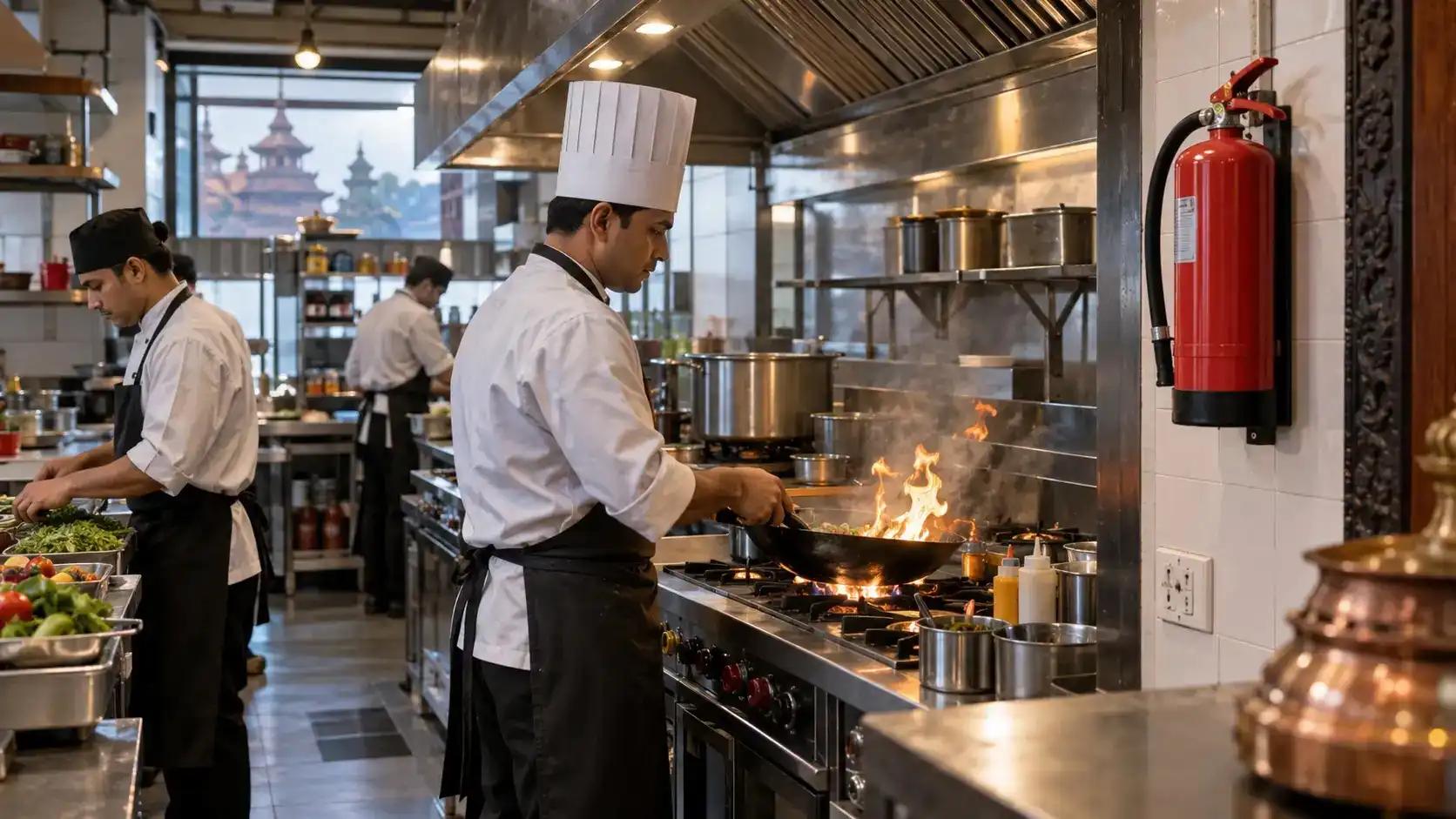
Restaurants and commercial kitchens contain some of the most varied fire hazards found in a commercial property. A single premises may contain cooking oils heated to high temperatures, LPG or other fuel gases, electrical appliances, combustible packaging, wooden furniture, cleaning products, storage materials and electrical distribution equipment.
For this reason, choosing a fire extinguisher for a restaurant should not mean installing the same extinguisher everywhere. A commercial kitchen may require specialist protection for cooking-oil fires, while the dining area, electrical equipment and LPG-related areas may require different extinguishing agents.
A proper restaurant fire-safety plan should therefore consider:
cooking oils and fats
LPG or gas systems
electrical cooking appliances
refrigerators and freezers
extraction hoods and grease buildup
combustible furniture and decorations
storage rooms
electrical panels
fire rating of extinguishers
floor area and building layout
extinguisher accessibility
evacuation routes
Safelincs currently provides ABC, CO₂, foam, K-Type and clean-agent fire extinguishers in Nepal, and its technical guidance specifically identifies restaurants as environments where cooking oils, LPG, electrical equipment and ordinary combustibles may occur together.
Why Restaurants Have Multiple Fire Hazards
A restaurant is not a single fire-risk zone. Consider a typical premises:
Dining Area → Kitchen → Cooking Line → LPG/Gas Area → Electrical Equipment → Storage → Electrical Panel → Extraction System
Each zone can involve a different type of fuel or ignition source.
For example, a dining area primarily contains furniture, paper, fabrics and electrical equipment. Inside the kitchen, however, temperatures are higher and ignition sources are more concentrated.
The kitchen may contain:
cooking oil
grease
LPG
gas burners
deep fryers
ovens
grills
electrical wiring
refrigeration systems
exhaust fans
combustible packaging
This is why restaurant owners should select extinguishers according to the specific hazard, extinguisher fire rating and intended application instead of relying on one universal cylinder.
Safelincs' broader fire safety equipment guidance similarly recommends combining detection, alarms, suppression and other fire-protection equipment according to building risk, layout and technical requirements.
Common Fire Risks in Restaurants and Commercial Kitchens
The first step in selecting fire extinguishers is identifying where a fire could start and what material could burn.
Restaurant Area | Typical Fire Hazard | Main Protection Consideration |
Dining area | Furniture, paper, fabric, decorations | General combustible protection |
Commercial kitchen | Oil, grease, LPG, heat and electrical equipment | Multiple extinguisher types may be required |
Deep-frying area | High-temperature cooking oils and fats | Specialist K-Type/wet-chemical protection |
LPG/gas area | Flammable gas | Suitable agent + safe fuel isolation |
Electrical appliances | Ovens, refrigeration, mixers, wiring | Electrically suitable extinguisher |
Electrical panel | Distribution board, breakers and wiring | Electrical fire protection |
Storage room | Packaging, food cartons, paper and supplies | Combustible fire load |
Extraction/hood area | Accumulated grease and heat | Grease management + specialist suppression planning |
Office/cash counter | Paper, computers and electronics | General + electrical protection |
This hazard-zone approach helps avoid one of the most common fire-safety mistakes: assuming that because an extinguisher is suitable for one area of the restaurant, it is suitable everywhere.
Which Fire Extinguishers Does a Restaurant Need?
Different extinguishing agents work differently. A restaurant may therefore need a combination of extinguishers. Common options, for restaurants include:
1. ABC Dry Powder Fire Extinguisher
ABC dry powder extinguishers provide multipurpose protection for several common fire hazards when correctly rated. They may be considered for areas involving:
paper
cardboard
furniture
packaging
some flammable liquids
LPG or other flammable-gas hazards where the extinguisher is suitably rated
mixed general hazards
Safelincs' ABC fire extinguisher range includes multipurpose dry-powder extinguishers intended for various commercial applications.ABC powder should not, however, be treated as a replacement for specialist protection of high-temperature cooking-oil fires.
2. CO₂ Fire Extinguisher
CO₂ extinguishers are commonly considered where energized electrical equipment is a significant hazard. Restaurant applications may include:
electrical panels
commercial refrigerators
electrical cooking equipment
control equipment
POS and computer systems
other appropriate electrical appliances
CO₂ also leaves virtually no solid residue after discharge, which can be advantageous around electrical equipment. Safelincs specifically states that its CO₂ extinguishers are intended for appropriate electrical and flammable-liquid hazards, but not for cooking-grease fires.
3. K-Type / Wet-Chemical Fire Extinguisher
High-temperature cooking oils and fats require special attention. Safelinc’s K-Type fire extinguisher category specifically identifies commercial kitchens, restaurants, cafeterias and similar food-service environments as applications for K-Type protection.
These extinguishers use a specialist wet-chemical agent designed to cool the burning oil and help suppress re-ignition.
Fire-class terminology can differ between standards and regions, so always check the extinguisher's actual label, tested fire rating, certification and manufacturer instructions rather than relying only on the generic class name. Safelincs' main extinguisher guidance makes the same distinction.
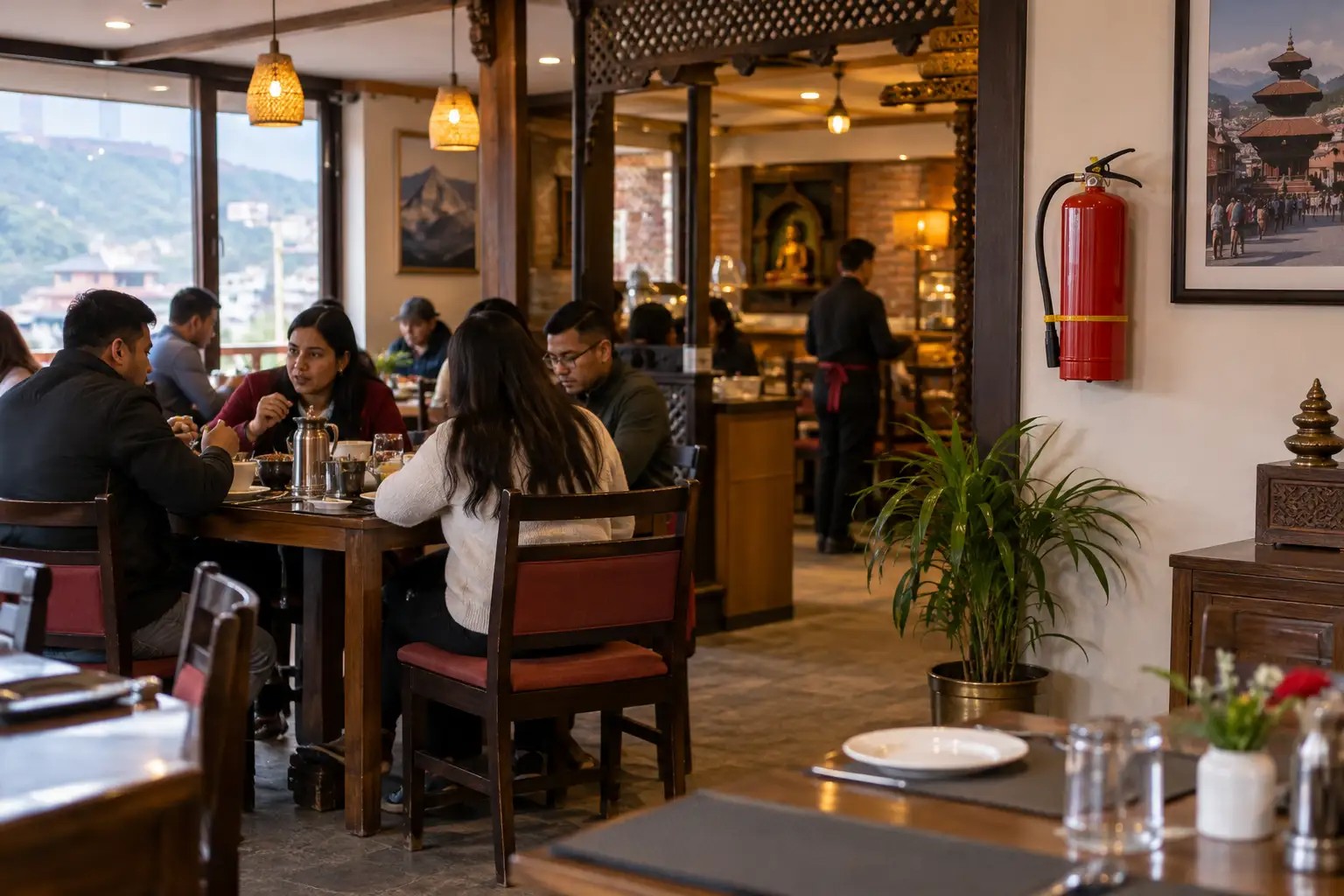
Fire Extinguishers for the Dining Area
The dining section generally presents a lower cooking-related hazard than the kitchen, but it still contains combustible materials.
Common examples include:
wooden furniture
upholstered seating
menus
paper products
curtains
decorative materials
cardboard
electrical lighting
electronic equipment
An appropriately rated general-purpose extinguisher such as ABC dry powder may therefore be considered for general dining-area coverage depending on the actual hazards and site requirements. Restaurants should also assess:
reception areas
cashier/POS areas
waiting areas
private dining rooms
staircases
corridors
The quantity and distribution should be based on coverage, fire rating, travel distance and accessibility rather than simply installing one extinguisher at the main entrance.
Fire Extinguishers for Commercial Kitchens
The commercial kitchen should be assessed independently from the dining area. A kitchen may contain several different hazards simultaneously.
For example: Cooking Oil + LPG + Electrical Equipment + Combustible Packaging
One extinguisher may not adequately address all four. A typical kitchen assessment should evaluate:
1. Cooking Equipment
Check:
fryers
grills
ovens
burners
hot plates
tandoors where applicable
other heat-producing equipment
2. Cooking Oils and Fats
Deep fryers and equipment containing significant quantities of heated oil require particular attention because cooking oils can reach very high temperatures.
3. LPG and Gas
Inspect:
cylinder location
gas pipes
regulators
valves
flexible connections
isolation arrangements
ventilation
4. Electrical Appliances
Commercial kitchens can contain:
refrigerators
freezers
electric ovens
mixers
grinders
exhaust systems
microwaves
other powered equipment
5. Storage
Cartons, disposable food packaging, cleaning supplies and other combustibles can substantially increase fire load when stored close to cooking equipment. The final extinguisher arrangement should therefore be based on the entire kitchen rather than the cooking line alone.
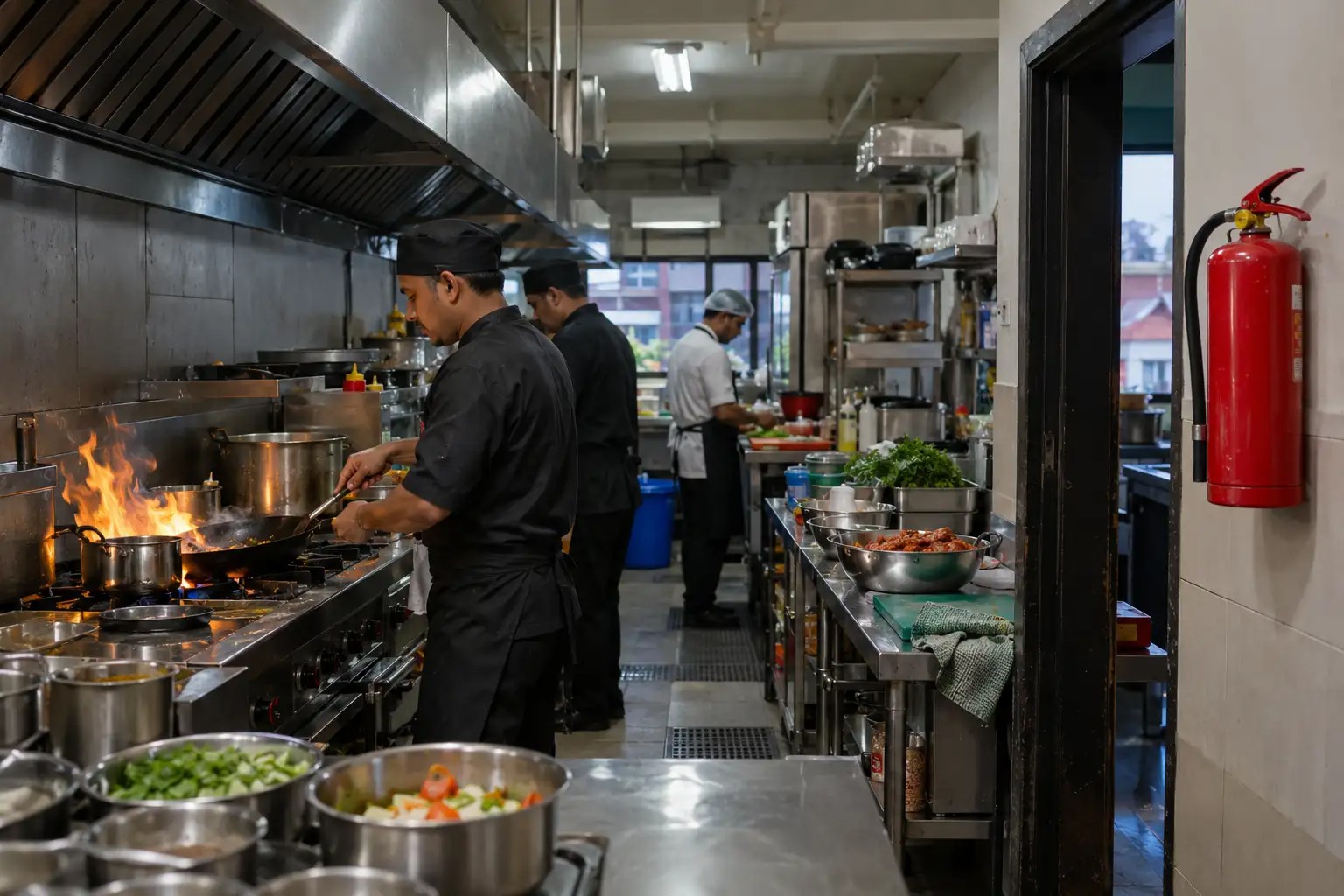
Why Cooking-Oil Fires Need Special Attention?
Cooking-oil fires behave differently from ordinary fires involving paper, wood or furniture. A deep fryer may contain several litres of oil heated to very high temperatures. Once ignition occurs, the oil can continue supplying fuel to the fire and may re-ignite if it is not sufficiently cooled.
This is why a commercial kitchen should not assume that its general-purpose ABC extinguisher is sufficient for every cooking hazard.
A specialist K-Type/wet-chemical extinguisher should be considered where significant high-temperature cooking oils and fats are present.
Safelincs' K-Type guidance explains that wet-chemical agents are intended to interact with hot cooking oils/fats, providing cooling and a surface layer that helps limit oxygen contact and re-ignition.
Never Treat Water as a Universal Kitchen Fire Solution
Applying water to burning cooking oil can create a severe hazard. Water can rapidly vaporize when it contacts extremely hot oil, violently spreading burning oil and flames.
Restaurant staff should therefore be trained to identify the fire hazard and use only the extinguishing equipment intended for that application.
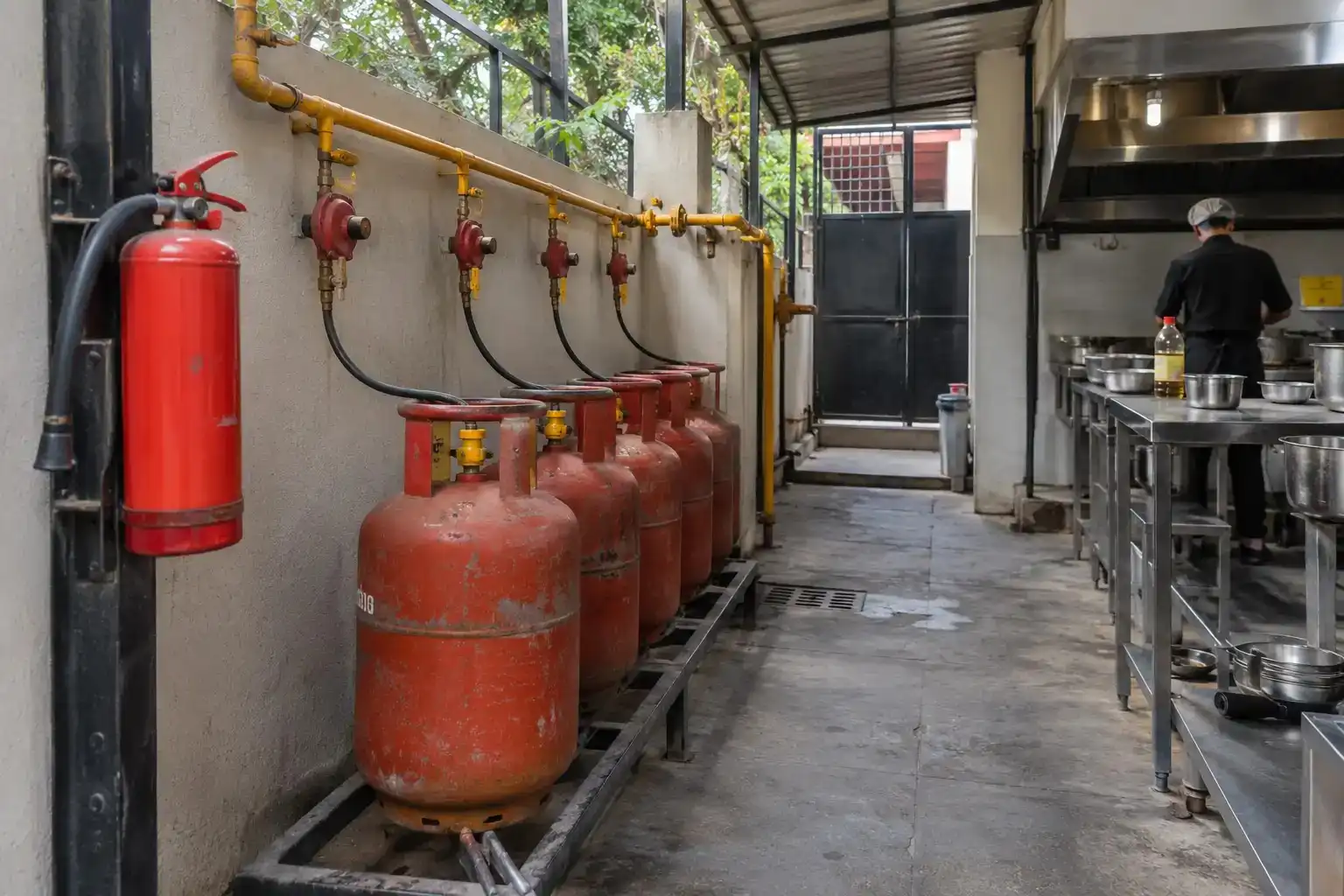
LPG and Gas Fire Risks in Restaurants
LPG is widely used as a cooking fuel and introduces another important restaurant fire hazard. Possible causes of LPG-related incidents include:
leaking connections
damaged hoses
faulty regulators
poorly maintained valves
improper cylinder storage
insufficient ventilation
ignition sources close to a leak
For a flammable-gas fire, selection should be based on an extinguisher specifically rated for the hazard. Safelincs' extinguisher guidance pairs suitable suppression of LPG and other flammable-gas hazards with fuel isolation, rather than treating extinguisher discharge alone as the complete solution.
A critical principle is that extinguishing a gas flame without stopping the leaking fuel can allow unburned gas to accumulate and create an explosion risk.
Where it can be done safely, emergency procedures should prioritize appropriate gas isolation and evacuation.
Restaurant staff should not attempt to control a significant LPG incident unless they are trained, appropriate equipment is available and conditions remain safe.
Fire Extinguishers for Electrical Equipment
Electrical appliances are present throughout modern restaurants. Examples include:
refrigerators
freezers
ovens
coffee machines
POS systems
dishwashers
mixers
ventilation controls
electrical distribution equipment
CO₂ extinguishers may be considered for appropriate energized electrical hazards because they provide suitable electrical-fire capability and leave virtually no solid residue.
Where safe and possible, electrical power should also be isolated. The final extinguisher should always be selected according to its actual rating and manufacturer instructions.
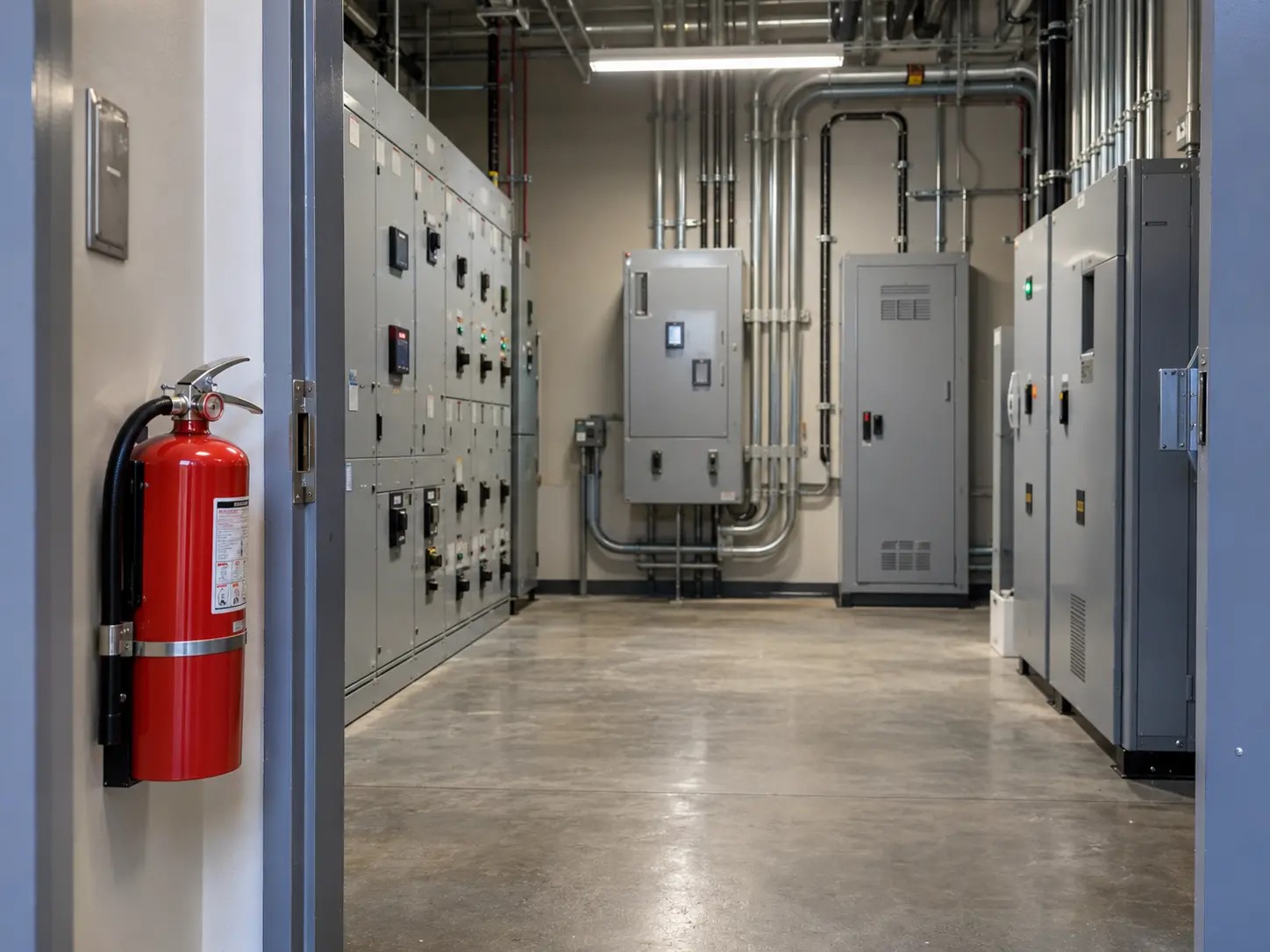
Electrical Panels and Distribution Rooms
A restaurant's electrical distribution board may supply high-load equipment such as:
ovens
refrigeration systems
air-conditioning
extraction fans
lighting
kitchen machinery
Electrical panels should remain:
unobstructed
easily accessible
free from unnecessary combustible storage
properly maintained
Where a CO₂ extinguisher is provided for the electrical risk, it should be positioned so that staff can access it without moving directly toward the developing fire.
Extraction Hoods, Ducts and Grease Buildup
Kitchen extraction systems can become a serious fire hazard when grease accumulates inside:
filters
hood surfaces
fans
ducts
ventilation components
A flame from cooking equipment can ignite grease deposits and allow fire to spread through the extraction system. Portable extinguishers alone should not be treated as a substitute for appropriate kitchen extraction maintenance or any fixed suppression system required by the specific kitchen design.
A commercial kitchen fire-safety program should therefore include: Grease Cleaning + Equipment Maintenance + Correct Extinguishers + Detection/Suppression + Staff Training
Cleaning frequency should reflect cooking volume, grease production and the equipment manufacturer's requirements.
How Many Fire Extinguishers Does a Restaurant Need?
There is no universal number that applies to every restaurant. A small café and a multi-floor restaurant with a large commercial kitchen do not have the same fire risk. The required quantity should consider:
1. Floor Area
Larger dining areas and kitchens may require additional coverage.
2. Number of Floors
Each occupied floor should be assessed separately.
3. Fire Rating
Extinguisher capacity alone should not determine coverage. The tested fire rating of the individual extinguisher is important.
4. Travel Distance
Staff should be able to reach an appropriate extinguisher quickly without having to pass through the developing fire.
5. Number of Hazard Zones
A restaurant containing:
kitchen
dining area
LPG area
electrical room
storage room
basement
may require multiple extinguisher types and locations even when its total floor area is relatively modest.
6. Kitchen Equipment
The number of fryers, cooking stations, appliances and gas installations can change the level of risk.
7. Building Layout
Partitions, staircases, multiple exits, enclosed rooms and separate floors can affect extinguisher distribution. A better planning sequence is:
Restaurant Survey → Identify Hazards → Divide Into Zones → Select Extinguisher Types → Check Fire Ratings → Assess Travel Distance → Calculate Quantity → Finalize Placement
Safelincs' fire-extinguisher guidance similarly states that quantity, travel distance and distribution should be determined from the fire-risk assessment and applicable requirements rather than a blanket cylinder count.
Where Should Restaurant Fire Extinguishers Be Placed?
An extinguisher should be quickly accessible but should not be installed so close to the likely fire source that the fire itself prevents access. Safelincs recommends that portable extinguishers generally remain:
clearly visible
easily accessible
properly mounted or secured
unobstructed
protected from unnecessary physical damage
positioned according to the identified hazard
identified by appropriate signage where required
Typical restaurant areas to assess include:
1. Dining & Public Areas
corridors
exit routes
common spaces
reception areas
2. Kitchen
accessible position near the kitchen exit
cooking area
deep-fryer zone
appliance area
3. Special-Risk Areas
electrical panel/room
LPG-related areas
storage rooms
basement/service areas
The extinguisher should ideally be accessible while the user maintains a safe escape route. Placing a K-Type extinguisher immediately behind a bank of fryers, for example, could make it difficult or impossible to reach during a fryer fire.
Restaurant Fire Extinguishers and Fire Alarm Systems
Portable extinguishers provide initial fire suppression. They should form part of a broader fire-protection strategy rather than functioning as the restaurant's only protection.
A complete strategy can follow: Detection → Alarm → Warning → Initial Suppression → Evacuation → Firefighting Response
Depending on the premises, this may involve:
heat detectors
suitable smoke detection
manual call points
fire alarm control panels
sounders/strobes
emergency lighting
portable extinguishers
commercial-kitchen suppression where required
fire hydrant equipment
fire-rated doors
emergency exits
Safelinc's fire safety equipment and products range covers fire detection, alarm, extinguishing and firefighting equipment for commercial properties.
Inspection and Maintenance
Restaurant extinguishers operate in a demanding environment where grease, heat, moisture and frequent movement can affect equipment.
Routine visual checks should confirm that:
the extinguisher is present
access is clear
the safety pin is intact
tamper seal is present
pressure indication is normal where applicable
hose/nozzle is undamaged
cylinder has no significant corrosion or damage
operating instructions are readable
signage remains visible
mounting brackets or stands remain secure
Any extinguisher that has been discharged, even partially, should be professionally assessed and returned to service appropriately before being relied upon again.
Kitchen equipment, gas systems and extraction systems should also receive appropriate inspection and maintenance.
Restaurant Staff Fire-Safety Training
Restaurant staff are often the first people to notice a developing kitchen fire. Appropriate personnel should understand:
where extinguishers are located
how to raise the fire alarm
how to isolate cooking equipment where safe
how LPG emergency procedures work
which extinguisher is intended for each hazard
when not to attempt firefighting
how to maintain an escape route
when evacuation should take priority
For many portable extinguishers, the basic operating sequence is remembered as:
P: Pull the pin
A: Aim at the base
S: Squeeze the handle
S: Sweep from side to side
Read Safelincs' complete How to Use a Fire Extinguisher: PASS Method Guide. The guide also stresses that PASS should only be attempted after confirming that the extinguisher is appropriate and that the fire remains small enough to approach safely.
Commercial Kitchen Fire Safety Checklist
Restaurant owners and kitchen managers can use the following checklist:
Cooking hazards have been assessed
Dining and kitchen areas are treated as separate fire zones
Deep fryers and cooking-oil hazards are identified
K-Type/wet-chemical protection is considered where required
LPG cylinders, regulators, pipes and valves are checked
Gas isolation arrangements are understood
Electrical appliances are inspected
Electrical panels remain unobstructed
Storage is kept away from major ignition sources
Grease buildup in extraction systems is controlled
Correct extinguisher types are available
Extinguisher fire ratings are checked
Quantity is based on area, hazards and layout
Travel distance is considered
Extinguishers remain clearly visible
Extinguishers are not positioned where fire could block access
Fire detection/alarm equipment is operational
Staff know the emergency procedure
Appropriate employees receive fire-extinguisher training
Emergency exits remain unobstructed
Inspection and maintenance records are kept
Choosing Fire Extinguishers for Your Restaurant in Nepal
The correct restaurant fire-extinguisher plan should protect more than the cooking area. Restaurants can contain:
Ordinary Combustibles + Cooking Oils + LPG + Electrical Equipment + Storage + Grease
Each hazard needs to be evaluated separately. For many restaurants, this can mean considering:
ABC Extinguisher: general combustible and appropriate mixed hazards
CO₂ Extinguisher: suitable electrical equipment risks
K-Type/Wet Chemical Extinguisher: high-temperature cooking oils and fats
The exact combination, capacity, fire rating, quantity and placement should be finalized according to the actual premises and applicable fire-safety requirements.
Safelincs Technologies supplies a range of fire extinguishers in Nepal for restaurant, commercial and industrial applications, together with widerfire safety equipment.
For restaurants and commercial kitchens, choose equipment based on the fire hazard and technical requirements, not simply extinguisher price or cylinder size.
Frequently Asked Questions
1. Which fire extinguisher is best for a restaurant?
There is no single extinguisher suitable for every restaurant hazard. ABC may be considered for general risks, CO₂ for suitable electrical hazards and K-Type/wet chemical for high-temperature cooking-oil and fat fires.
2, Which fire extinguisher should be used in a commercial kitchen?
The selection depends on the cooking equipment and fuels present. Commercial kitchens using significant amounts of hot cooking oil should evaluate specialist K-Type/wet-chemical protection.
3. What type of fire extinguisher is used for cooking oil?
A specialist extinguisher intended for high-temperature cooking-oil and cooking-fat fires should be used. Safelincs provides K-Type extinguishers specifically for commercial cooking environments.
4. Can an ABC extinguisher be used for a cooking-oil fire?
ABC extinguishers should not be treated as a substitute for specialist protection of high-temperature cooking-oil and fat hazards. Check the actual extinguisher rating and use the extinguisher designed for the identified hazard.
5. Is CO₂ suitable for restaurant electrical equipment?
CO₂ extinguishers may be appropriate for suitable energized electrical equipment and leave virtually no solid residue. They are not intended as the primary extinguisher for cooking-oil or grease fires.
6. What fire extinguisher should be used for LPG?
Use an extinguisher specifically rated for the identified flammable-gas hazard and follow safe fuel-isolation procedures. Extinguishing a leaking gas flame without controlling the fuel supply can allow unburned gas to accumulate.
7. How many fire extinguishers does a restaurant need?
Quantity depends on floor area, number of floors, fire rating, kitchen hazards, travel distance, layout and specialist areas. A site-specific fire-risk assessment should determine the final number and distribution.
8. Where should a K-Type extinguisher be placed?
It should be easily accessible to trained staff but positioned so a fryer or cooking fire does not block access. The final location should reflect kitchen layout, escape routes and applicable fire-safety requirements.
9. Are portable extinguishers enough for commercial-kitchen fire safety?
No. Restaurant fire protection may also require fire detection, alarms, safe LPG systems, grease-control procedures, kitchen suppression, emergency exits, staff training and other measures depending on the premises.