
Fire Alarm System
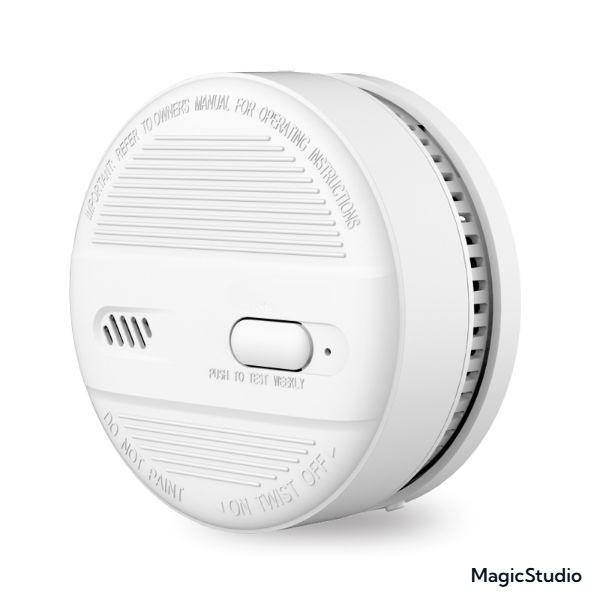
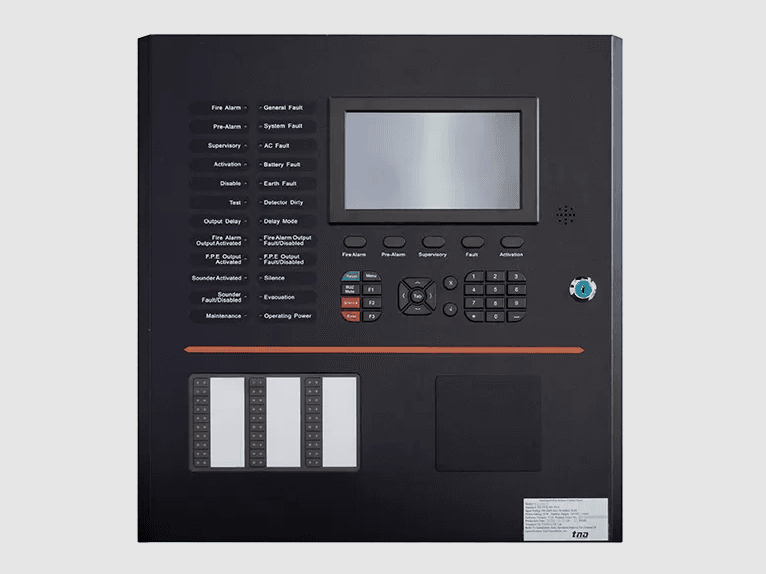
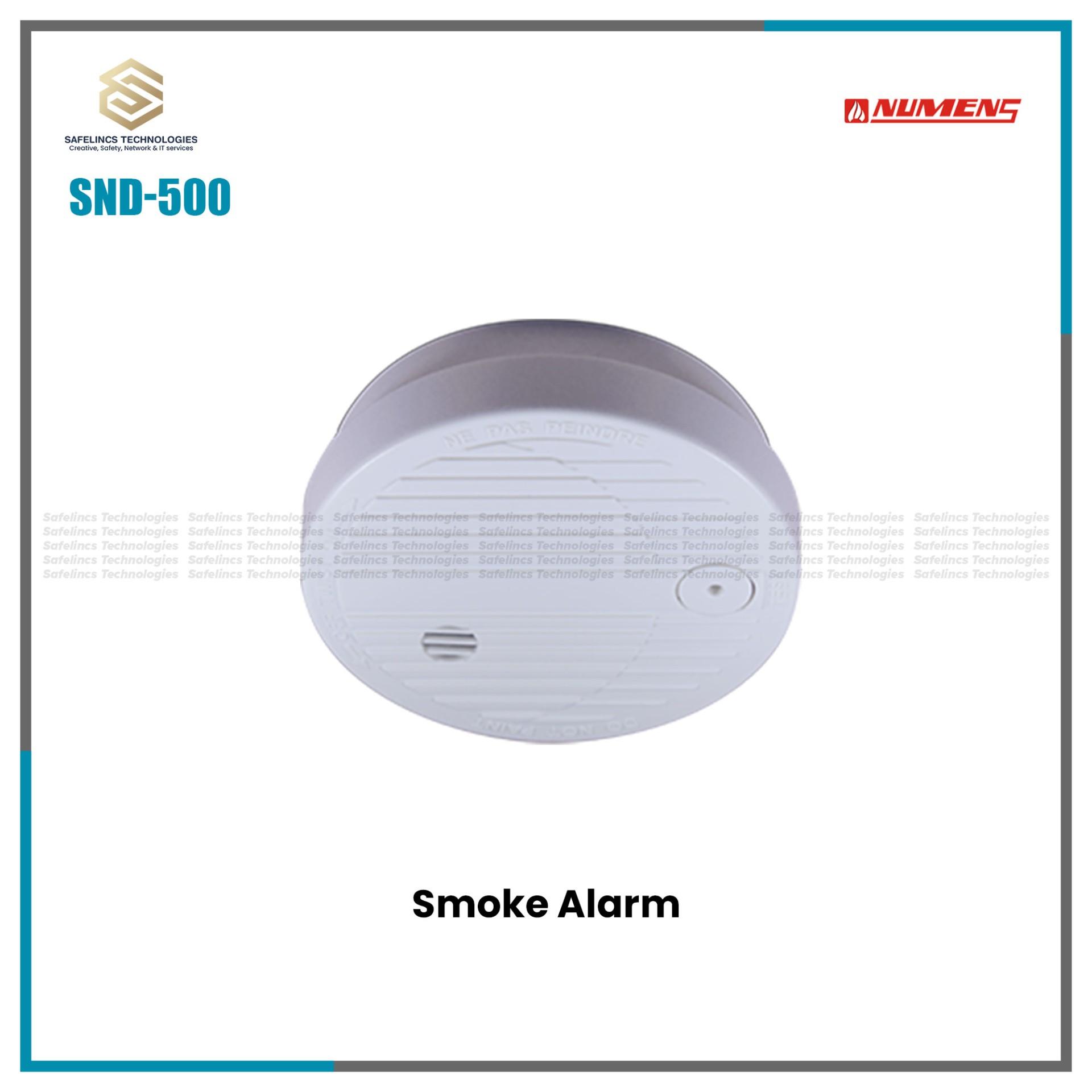
Battery Operated Smoke Detector
9 Volt Battery Operated Stand Alone Smoke DetectorRs. 2,500
Rs. 3,200-28% OFF
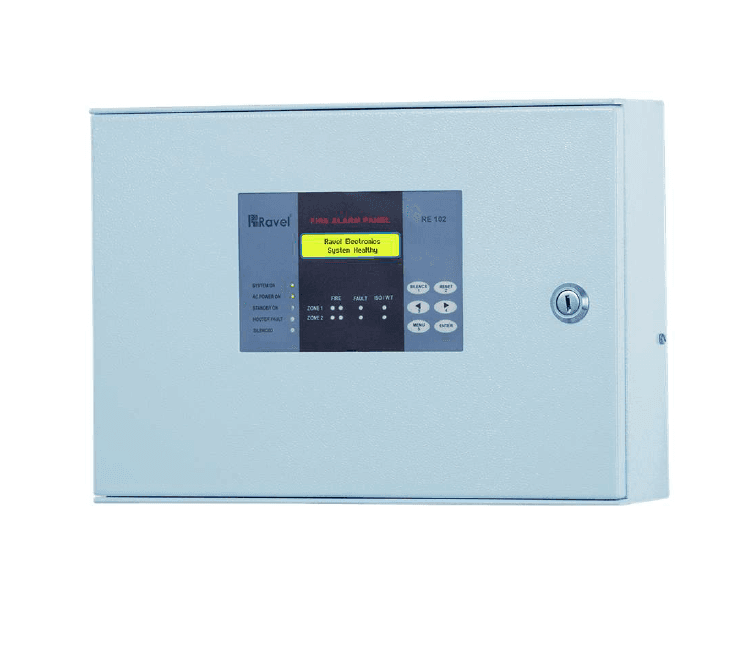
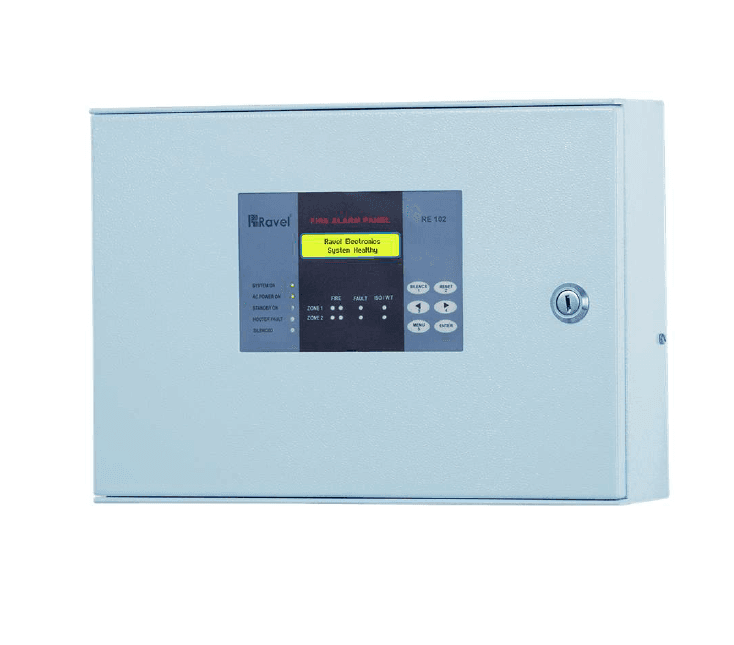
Conventional Type Fire Alarm Panels
2 Zone RE-102 Conventional Fire Alarm PanelRs. 15,675
Rs. 16,500-5% OFF
A fire alarm system is an integrated life-safety system designed to detect fire conditions, process alarm and fault signals, notify building occupants and operate programmed emergency interfaces. A complete system typically combines a Fire Alarm Control Panel (FACP), smoke and heat detectors, manual call points (MCPs), notification appliances, interface modules, fire-resistant cabling, primary power and standby batteries.
Fire alarm systems in Nepal are used in offices, hospitals, hotels, schools, warehouses, factories, shopping complexes and other commercial or industrial facilities. Depending on building size, alarm-location requirements, system integration and future expansion, projects may use conventional fire alarm panels, addressable fire alarm panels or standalone detection devices.
Safelincs Technologies supplies fire alarm panels, smoke and heat detectors, manual call points, sounders, strobes and addressable modules as part of its wider fire safety equipment range.
How Does a Fire Alarm System Work?
A fire alarm system continuously supervises connected circuits and field devices for normal, alarm, supervisory and fault conditions.
A simplified operating sequence is:
Detector / MCP → IDC or SLC → FACP → Cause-and-Effect Logic → NAC / Addressable Output → Sounder, Strobe or Interface
When a smoke detector, heat detector or MCP activates, the input reaches the control panel. The FACP processes the signal, identifies either the affected conventional zone or individual addressable device, and activates the required notification and control outputs.
Programmed interfaces may also initiate functions such as:
AHU shutdown
magnetic-door release
elevator recall
fire/smoke damper operation
sprinkler monitoring
suppression-system interface
Main Components of a Fire Alarm System
Component | Technical Function |
FACP | Receives and processes alarm, fault and supervisory signals |
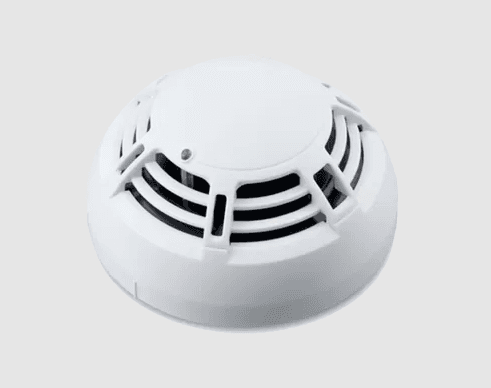
Smoke Detector | Detects products of combustion using optical or other sensing technology |
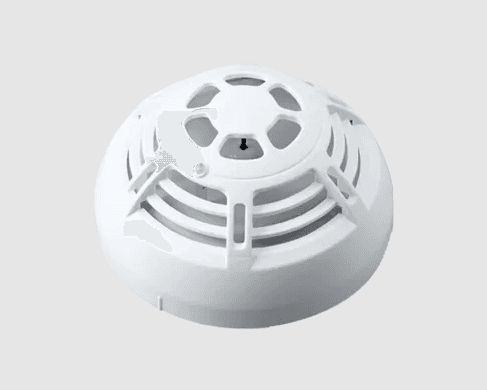
Heat Detector | Detects fixed-temperature or rate-of-rise conditions |
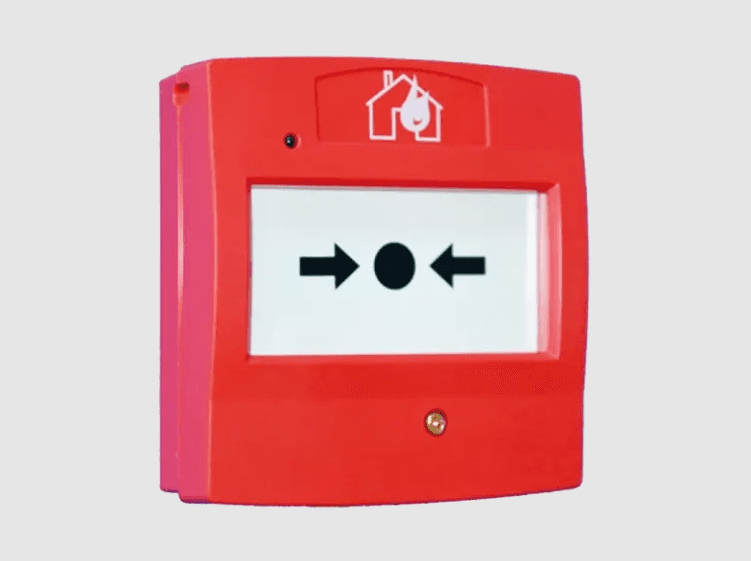
Manual Call Point | Allows manual initiation of a fire alarm |
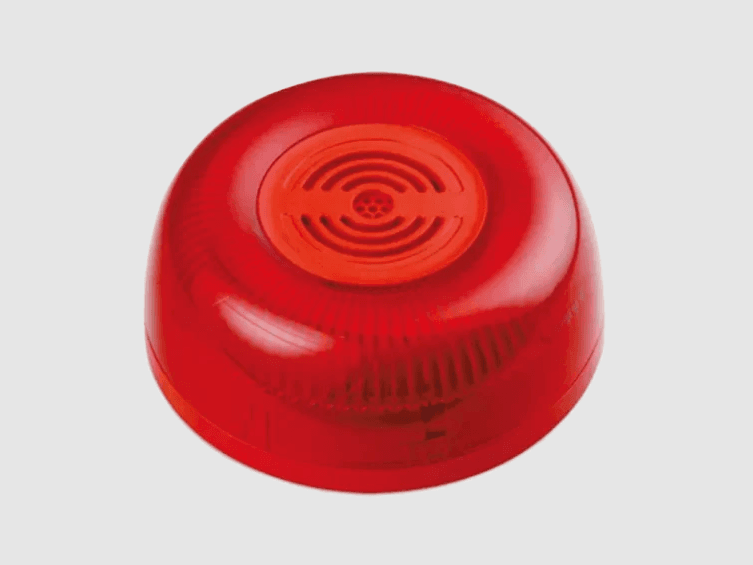
Sounder / Hooter | Provides audible evacuation notification |
Strobe | Provides visual alarm notification |
Control Module | Generates programmed outputs to external systems |
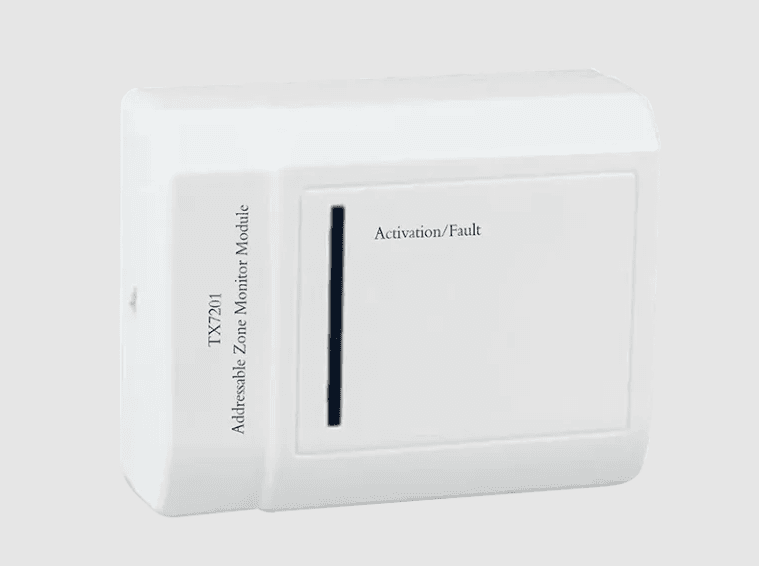
Monitor Module | Supervises status/contact inputs from external equipment |
Isolator Module | Isolates a short-circuited section of an addressable loop |
Power Supply | Converts mains input into the required system DC supply |
Standby Battery | Maintains operation during mains failure |
Fire Alarm Cable | Carries detection, notification, power and communication signals |
For conventional applications, Safelincs supplies dedicated conventional smoke and heat detectors along with conventional MCPs and alarm notification devices.
For intelligent systems, the range includes addressable smoke detectors and addressable MCPs, sounders and modules.
Device compatibility is critical. Addressable detectors and modules normally communicate using manufacturer-specific protocols, so operating voltage alone does not confirm compatibility with an addressable panel.
Types of Fire Alarm Systems
1. Conventional Fire Alarm System
A conventional fire alarm system divides a building into geographical detection zones.
Typical architecture: Detector / MCP → IDC → Conventional FACP → NAC → Sounder / Strobe
The Initiating Device Circuit (IDC) connects conventional detectors and MCPs to a specific zone. When one device enters alarm, the panel identifies the affected zone rather than the individual detector.
Conventional detection circuits are normally supervised for wiring faults. Depending on panel design, an End-of-Line (EOL) resistor or device allows the FACP to distinguish between normal, alarm, open-circuit and short-circuit conditions.
Safelincs supplies conventional fire alarm panels in different zone capacities for smaller and medium-sized installations.
2. Addressable Fire Alarm System
An addressable fire alarm system communicates digitally with individually identified field devices.
Typical architecture: Addressable Detector / MCP / Module → SLC Loop → Addressable FACP → Programmable Outputs
Each detector, MCP or module is assigned a logical address. Instead of displaying only “Zone 2 Alarm,” the panel can identify a specific programmed location such as:
Loop 1 – Device 027 – Smoke Detector – Electrical Room
Addressable systems can provide:
individual device identification
detailed fault localisation
event logging
programmable cause-and-effect
loop monitoring
short-circuit isolation
advanced input/output control
easier system expansion
Safelincs provides addressable fire alarm systems, including 2-loop and 4-loop panels, together with compatible addressable detectors and addressable modules, MCPs and sounder-strobes.
3. Wireless Fire Alarm System
Wireless systems use supervised radio communication between compatible field devices and the control equipment.
Important design considerations include:
RF coverage
signal attenuation
battery supervision
repeater requirements
interference
communication-fault monitoring
Wireless systems can be useful in retrofit or heritage projects where new fire-resistant cable installation is difficult.
Conventional vs Addressable Fire Alarm System
Technical Factor | Conventional | Addressable |
Alarm identification | Zone level | Individual device |
Detection circuit | IDC / zone circuit | SLC / addressable loop |
Communication | Circuit-state monitoring | Digital device communication |
Device addressing | No individual address | Unique logical address |
Fault localisation | Zone/circuit | Device or loop section |
Wiring architecture | Multiple radial zones | Loop architecture |
Programming | Basic | Advanced |
Cause-and-effect | Limited | Highly programmable |
Loop isolation | Generally not applicable | Available with compatible isolators |
Scalability | Moderate | High |
Typical application | Small/medium premises | Medium/large/complex premises |
Initial investment | Lower | Higher |
For smaller properties with limited zones, a conventional fire alarm system can provide a practical solution. Larger hotels, hospitals, multi-storey buildings and industrial facilities generally benefit from the device-level identification and programmability available with addressable fire alarm systems.
Fire Alarm Control Panel
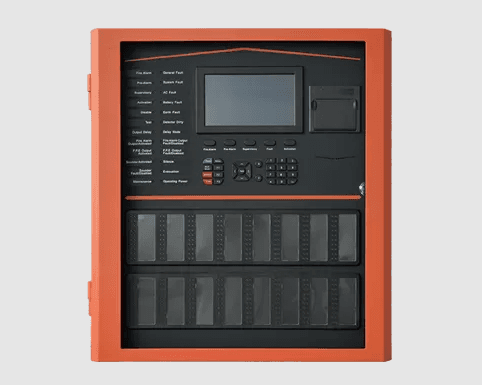
The Fire Alarm Control Panel (FACP) is the central processing unit of the system.
Depending on the panel type, it may supervise:
IDC zone circuits
SLC communication loops
NAC continuity
alarm and fault inputs
AC mains supply
battery voltage
charger condition
earth/ground faults
network communication
programmable relays and outputs
1. Conventional Fire Alarm Panel
A conventional panel normally contains a fixed number of detection zones, such as 2-zone, 4-zone, 6-zone or 8-zone configurations.
Each zone supervises a separate IDC. Panel selection should consider device quantity, circuit current, cable resistance, NAC load and spare capacity. View available conventional fire alarm control panels.
2. Addressable Fire Alarm Panel
Addressable panels are selected according to parameters such as:
number of SLC loops
addresses supported per loop
detector/module capacity
loop current
network capability
repeater support
programmable outputs
event-log capacity
supported device protocol
For larger installations, explore addressable fire alarm panels in Nepal.
Fire Alarm Detectors
1. Smoke Detectors
Photoelectric smoke detectors typically detect smoke using optical light-scattering principles. Detector selection should consider sensitivity, operating voltage, standby current, alarm current, environmental range and panel compatibility.
Safelincs supplies both conventional smoke detectors and individually identifiable addressable smoke detectors.
2. Heat Detectors
Heat detectors respond to temperature rather than smoke. Common detection methods include:
Fixed Temperature: activates when the sensing element reaches a predetermined temperature.
Rate-of-Rise: responds when temperature increases above a specified rate.
Heat detection can be useful in areas where dust, steam or normal airborne particles make smoke detection unsuitable.
3. Beam & Multi-Sensor Detection
Beam smoke detectors monitor optical obscuration across larger spaces and are commonly used in warehouses, atriums and high-ceiling areas. Multi-sensor detectors combine two or more sensing parameters, such as optical smoke and temperature, to improve fire discrimination in compatible systems.
For residential or standalone applications where a complete FACP-based system is not required, battery-operated smoke detectors are also available.
Fire Alarm Modules & Interfaces
Addressable modules allow the fire alarm system to communicate with or control external equipment.
1. Control Module
A control module converts a programmed FACP command into an electrical or relay output.
Typical applications include:
AHU shutdown
magnetic-door release
fire/smoke damper control
elevator recall
external notification
suppression-system interface
2. Monitor Module
A monitor module converts an external contact into an addressable system input.
It can monitor devices such as:
sprinkler water-flow switches
valve supervisory switches
pressure switches
suppression-panel contacts
equipment fault contacts
3. Isolator Module
An isolator protects an addressable SLC against short-circuit faults. Correctly positioned isolators can disconnect the affected cable section while allowing unaffected sections of the loop to continue communicating.
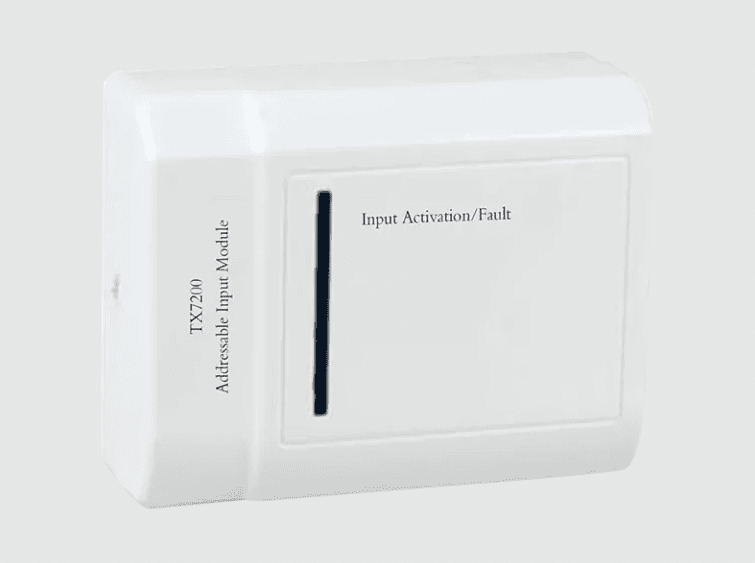
Safelincs currently lists addressable input modules, zone monitor units, MCPs and alarm output devices within its addressable fire alarm range.
Fire Alarm System Wiring & Circuit Architecture
Fire alarm wiring should be designed according to the selected panel, manufacturer specifications and applicable project requirements.
1. Conventional Wiring
Typical conventional circuits include:
IDC: detectors and manual call points
NAC: sounders and strobes
Auxiliary outputs: relays and external interfaces
Where an EOL device is required, it should be installed at the electrically supervised end of the field circuit rather than simply at the panel.
2. Addressable Wiring
An SLC carries digital communication between the addressable FACP and compatible field devices.
Loop design should consider:
maximum device addresses
loop current
conductor resistance
cable capacitance
voltage drop
maximum cable length
isolator positions
topology permitted by the manufacturer
Addressable products from different manufacturers should not be assumed to communicate simply because they use similar two-wire connections.
Fire Alarm System Design & Installation
Professional fire alarm system installation in Nepal should follow an engineered process rather than selecting devices only according to price.
Important design parameters include:
building occupancy and risk
floor area and number of levels
detector type and placement
conventional zoning or addressable loop design
panel and loop capacity
circuit current
voltage drop
notification coverage
fire-resistant cable routing
standby battery capacity
interface requirements
future expansion
A typical workflow is: Site Survey → System Design → Device Layout → Zone/Loop Planning → Cable Installation → Panel & Device Installation → Addressing/Zoning → Programming → Testing → Commissioning
The fire alarm system should also be coordinated with the broader fire safety equipment installed within the building, including fire extinguishers and fire hydrant systems.
Cause-and-Effect & System Integration
Modern addressable systems can execute programmed actions after specified fire-alarm inputs are received.
For example: Smoke Detector Alarm → FACP Processes Input → Sounders Activate → AHU Stops → Fire Door Releases → Elevator Recall Output Activates
Possible interfaces include:
HVAC/AHU
access-control doors
elevators
smoke-control systems
fire/smoke dampers
sprinkler supervision
suppression systems
building management systems
voice evacuation systems
The required cause-and-effect sequence should be defined during system design and verified during commissioning.
Fire Alarm Testing & Commissioning
Commissioning confirms that the installed system performs according to the approved design and programmed logic.
Testing may include:
detector activation
MCP activation
sounder/strobe testing
zone identification
address/location verification
open-circuit fault simulation
short-circuit fault testing
isolator operation
mains failure
standby battery operation
module input/output testing
cause-and-effect verification
event-log checking
For addressable systems, each device should be verified against its programmed location description so the panel identifies the correct room, floor or area during an emergency.
Fire Alarm System Maintenance
Periodic maintenance is necessary to keep the system operational and to identify developing faults before an emergency.
Checks can include:
FACP alarm/fault status
detector condition
MCP accessibility
sounder operation
battery condition
charger voltage
cable faults
missing addressable devices
loop communication
programmed interfaces
Common system faults include open circuits, short circuits, earth faults, low batteries, duplicate or missing addresses and communication failures.
Fire Alarm System Standards & Compliance
Fire alarm projects may reference standards such as NFPA 72, EN 54 or BS 5839, depending on the project specification and applicable requirements.
Product certification or listing should always be verified for the exact model where required. Installation must also follow manufacturer instructions and requirements established by the applicable local authority or project specification.
Fire Alarm System Price in Nepal
The fire alarm system price in Nepal depends on system architecture, panel capacity, detector quantity, brand, cabling, modules, notification devices and installation requirements.
Fire Alarm Equipment | Example Price |
Battery-Operated Smoke Detector | From around NPR 1,199 |
Conventional Smoke / Heat Detector | Around NPR 1,250–2,500 |
Conventional MCP / Hooter | Around NPR 1,650–3,800 |
Addressable Smoke Detector | Around NPR 4,520 |
Addressable Heat Detector | Around NPR 4,520 |
Addressable MCP | Around NPR 5,200 |
Addressable Sounder & Strobe | Around NPR 5,800 |
Conventional Fire Alarm Panel | Around NPR 8,500–24,500 |
Addressable Fire Alarm Panel | Contact for current price |
Prices can vary according to brand, model and stock availability.
The total project cost can also include fire-resistant cable, containment, interface modules, isolators, programming, installation, testing, commissioning and documentation. Customers can compare conventional fire alarm panels, addressable fire alarm panels, addressable smoke detectors and other fire alarm devices according to the system design.
How to Choose the Right Fire Alarm System
For a small building with limited detection zones, a conventional system may provide sufficient alarm location and lower initial equipment cost.
For medium and large buildings, an addressable system is generally more suitable when the project requires:
exact device identification
multiple floors
large device quantities
event history
advanced cause-and-effect
extensive integration
future expansion
detailed fault localisation
For standalone residential detection, a battery-operated smoke alarm may be appropriate where a complete control-panel-based system is not required.
Final selection should be based on building risk, occupancy, panel/device compatibility and engineering requirements, not price alone.
Frequently Asked Questions
1. What is a fire alarm system?
A fire alarm system detects fire-related conditions and sends the information to a control panel. The panel then activates notification devices and programmed emergency outputs.
2. How does a fire alarm system work?
A smoke detector, heat detector or MCP sends an alarm through a zone circuit or addressable loop to the FACP. The panel processes the input and activates the required sounders, strobes and interfaces.
3. What are the main fire alarm system components?
The main components are the FACP, detectors, MCPs, sounders, strobes, modules, cables, power supply and batteries. Addressable systems additionally use individually identified field devices and communication loops.
4. What is the difference between conventional and addressable fire alarms?
A conventional panel normally identifies the affected zone, while an addressable panel identifies the individual device. Addressable systems also provide greater programming, fault localisation and expansion capability.
5. What is a control module in a fire alarm system?
A control module provides a programmed output from an addressable fire alarm system to compatible equipment. It can be used for functions such as door release, AHU shutdown or other approved fire-safety interfaces.
6. What is an isolator module in a fire alarm system?
An isolator detects and disconnects a short-circuited section of a compatible addressable loop. This can help maintain communication with unaffected loop sections.
7. What is the fire alarm system price in Nepal?
The price depends on the panel, detector quantity, system type, modules, cable and installation requirements. Safelincs currently lists individual fire alarm equipment from around NPR 1,199, while complete systems can cost significantly more.
8. What cable is used for a fire alarm system?
Fire-resistant cable is commonly specified for fire alarm circuits, but conductor size and cable characteristics depend on the system and applicable project requirements. Always follow the panel manufacturer's wiring specifications and approved system design.
9. What is an SLC in a fire alarm system?
SLC stands for Signaling Line Circuit and is commonly used for communication with addressable field devices. The permitted topology, number of devices and cable length depend on the fire alarm manufacturer.
10. How often should a fire alarm system be tested?
Testing frequency should follow the applicable code, project maintenance plan and manufacturer requirements. Detectors, MCPs, notification appliances, batteries, interfaces and fault monitoring should all be included in the maintenance programme.